Home › Cat Breeds › Siberian Cat
Siberian Cat: Size, Personality, Hypoallergenic Facts, Lifespan and Price (Vet-Reviewed)
 Written & medically reviewed by Dr. Muhammad Usama, DVM, RVMP· PVMC license no. 9472
OriginRussia
Height9–11 inches
Adult weight13–26 lb (males 17–26)
Life span12–15 years
Is a Siberian cat right for you?
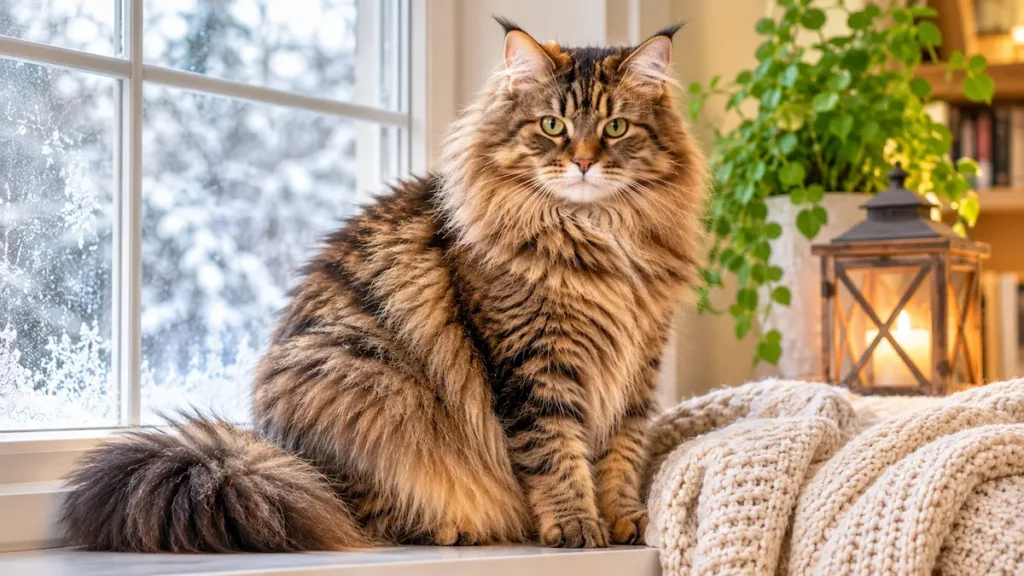
The Siberian is a large, athletic, triple-coated forest cat from Russia: males usually weigh 17 to 26 pounds, females 13 to 17 pounds, and most live about 12 to 15 years. It suits active families, kids and multi-pet homes that want a playful, dog-like cat. Siberians are often marketed as hypoallergenic, but no cat truly is; some allergy sufferers react less to certain Siberians, so always test your reaction first.
- 📏 Size: medium to large and heavy for its size; full size at 4 to 5 years
- ❤️ Personality: playful, intelligent, affectionate, chirps and trills
- 🤧 Allergies: not hypoallergenic; some cats may produce less Fel d 1, but evidence is limited
- 💰 Price: about $1,000 to $2,500 for a breeder kitten in 2026
Siberian quick facts
The Siberian is Russia’s national cat: a naturally occurring forest breed with a weatherproof triple coat, a rounded build and a famously friendly nature. Every figure below comes from a registry, vet or breed source listed at the end of this guide.
- Origin
- Russia
- Breed group
- Medium to large, longhair
- Height
- About 9 to 11 inches at the shoulder
- Adult weight
- Males 17 to 26 lb · females 13 to 17 lb
- Full grown
- 4 to 5 years
- Lifespan
- About 12 to 15 years (range 10 to 18)
- Coat
- Water-resistant triple coat: guard, awn and down hairs
- Shedding
- Moderate, with heavy sheds in spring and fall
- Eyes
- Any color; blue in colorpoints
- Temperament
- Energetic, friendly, playful, affectionate
- Good with kids and pets
- Yes, very sociable
- Hypoallergenic
- No (some may produce less Fel d 1)
- Popularity
- #8 in the CFA’s 2026 list
- Other names
- Siberian Forest Cat, Moscow Semi-longhair; colorpoints: Neva Masquerade
Are Siberian cats hypoallergenic?
No, Siberian cats are not hypoallergenic, but some individual Siberians appear to produce less Fel d 1, the main cat allergen, which is why some people with mild allergies tolerate them better. Every cat makes Fel d 1 in its saliva and skin, and levels vary from cat to cat, even within the Siberian breed.
The research is still thin. In a 2017 genetic study, only one of three Siberians whose saliva had been tested showed a low Fel d 1 level, and the authors called for larger studies before using genes to pick low-allergen cats. PetMD’s vet-reviewed profile states plainly that Siberians are not considered hypoallergenic. So treat any “allergy-free Siberian” promise as marketing, not medicine.
How to test whether you can live with a Siberian
- Talk to your doctor or allergist first, especially if you have asthma.
- Visit the breeder’s home and spend at least an hour with the actual kitten and its parents, ideally on two separate visits.
- Ask whether the breeder has tested saliva Fel d 1 levels, and understand that results vary and are not a guarantee.
- Choose a breeder with a clear return policy in case symptoms appear at home.
- Reduce allergens at home: brush often, wash bedding weekly and keep the cat out of the bedroom.
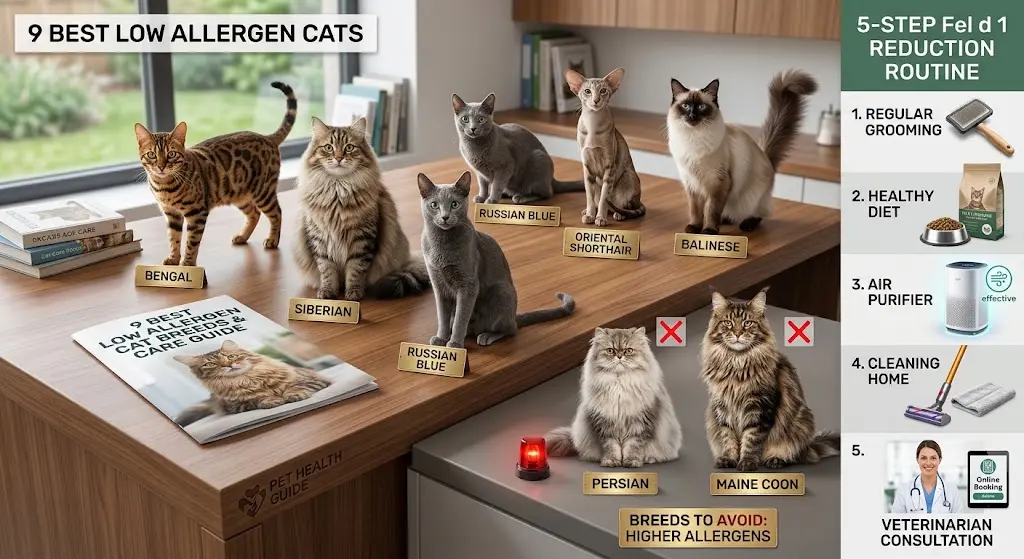
Compare other options in our guide to cat breeds for people with allergies.
Siberian breed scorecard
On our 1 to 5 scale, the Siberian scores highest for playfulness and kid- and pet-friendliness, and lowest for low maintenance during shedding season. These are editorial ratings by Dr. Usama based on the sources below; individual cats vary.
- AffectionLoving and communal, but not clingy. 4/5
- PlayfulnessStays playful and curious for years; full maturity takes about 5 years. 5/5
- Activity levelVery athletic climber and jumper; needs vertical space. 4/5
- Grooming needCoat resists tangles, but needs more brushing in seasonal sheds. 3/5
- SheddingHeavy spring and fall molts from the dense undercoat. 4/5
- VocalChirps and trills rather than loud meows. 3/5
- Kid-friendlyGentle and patient; often described as dog-like. 5/5
- Pet-friendlyMixes well with other cats and respectful dogs. 5/5
- Inherited health riskA natural breed with few known genetic problems; HCM is recorded. 2/5
- First-time owner fitEasygoing, but needs plenty of play and climbing space. 4/5
Is a Siberian right for you? Good fit vs not a good fit
A Siberian is right for you if you want an active, social cat and can give it daily play, climbing space and company. Check this list before you contact a breeder or rescue.
- Want a playful, interactive, “dog-like” cat
- Have kids, a cat-friendly dog or another cat
- Have room for a tall, sturdy cat tree
- Have mild cat allergies and can test your reaction first
- Are home often or can get a second cat
- Have severe allergies or asthma triggered by cats
- Want a calm, low-energy lap cat (consider a Ragdoll)
- Are away long hours most days
- Can’t handle seasonal shedding
- Have fragile items on every shelf
Siberian cat personality and temperament
Siberian cats are playful, intelligent and affectionate, with a friendly, “dog-like” personality that makes them great with families, visitors and other pets. They like to be involved in everything you do without being demanding.
A typical Siberian greets guests, follows you around the house and invents games with whatever it finds. Many chirp and trill to talk to their people rather than meowing loudly. They are agile climbers, so expect them on top of bookcases and cabinets if you don’t give them a cat tree.
Siberians are also known for an unusual interest in water; some join their owners near the shower or play with dripping taps, helped by their water-resistant coat. They are communal cats that dislike long periods alone, so a busy household or a second cat suits them best. Read how long you can leave a cat alone before planning trips.
Are Siberian cats good with kids and dogs?
Yes, Siberians are one of the best breeds for families because they are gentle, patient and confident with children and respectful dogs. Introduce new pets slowly; our guide to introducing a cat to a dog explains how.
Are Siberian cats cuddly?
Many Siberians are affectionate and enjoy being near their people, but they are not usually clingy lap cats. Some love laps, while others prefer to hunt toys and then nap beside you.
Siberian cat size: how big do Siberian cats get?
Adult male Siberians usually weigh 17 to 26 pounds and females 13 to 17 pounds, at about 9 to 11 inches tall. They feel heavy for their size because of dense bones, strong muscles and a barrel-shaped body hidden under a thick coat.
When is a Siberian cat fully grown?
A Siberian is usually fully grown at 4 to 5 years old, one of the slowest-maturing breeds. Siberians also reach sexual maturity earlier than many breeds, so talk to your vet about spay or neuter timing.
| Age | Siberian growth stage | What to do |
|---|---|---|
| 0 to 12 months | Fast growth; softer kitten coat | Kitten food in measured meals; see our kitten feeding chart |
| 1 to 3 years | Frame and muscle fill out; adult triple coat grows in | Adult food; plenty of climbing and play |
| 4 to 5 years | Full size, ruff and coat | Watch weight; yearly vet and dental checks |
Siberian cat colors and patterns
Siberian cats come in every color and pattern, with or without white, including black, white, gray (blue), red (orange), cream, silver, tabby, calico and colorpoint. Brown tabby is the classic “forest cat” look. Eyes can be any color, but colorpoint Siberians have blue eyes.
- Brown tabby
- Silver tabby
- Black
- White
- Blue (gray)
- Red (orange)
- Calico
- Colorpoint (Neva Masquerade)
What is a Neva Masquerade?
A Neva Masquerade is a colorpoint Siberian, with darker points on the face, ears, legs and tail and blue eyes. Some registries list it as a separate breed name; others treat it as a color variety of the Siberian.
Swatches are simple color guides, not photos. Registries (CFA, TICA, GCCF) accept all colors and patterns for this breed.
Siberian care: food, grooming, exercise and litter box
Siberian care focuses on daily play, regular brushing during sheds and a large, sturdy setup for a big, athletic cat.
Nutrition
Feed a Siberian a complete, high-protein food in measured portions, because this big cat can still become overweight without enough exercise. Use the food label as a starting point, adjust to body condition and keep treats under 10% of daily calories. Our cat feeding calculator helps you set portions.
Grooming
Comb a Siberian a few times a week with a steel comb, and more often during spring and fall sheds. The triple coat resists tangles better than many longhairs but releases a lot of undercoat in molting season. See our best brushes for long-haired cats. Trim nails regularly and brush teeth.
Exercise and enrichment
A Siberian needs tall climbing space and two or three active play sessions a day. Choose a heavy, tall cat tree with wide perches (see the best cat trees for large cats), add wall shelves and window perches, and rotate puzzle toys. Secure shelves and furniture, because Siberians are bold climbers.
Litter box and water
A full-grown Siberian needs an extra-large litter box about 1.5 times its body length. See what size litter box your cat needs and our big-cat picks in the best litter boxes for large cats. Siberians often love water, so an easy-to-clean water fountain helps them drink more, which also supports urinary health.
Siberian health problems and lifespan
Siberians are a natural, generally healthy breed, but the main concerns are hypertrophic cardiomyopathy (HCM), lower urinary tract disease, obesity, dental disease and climbing injuries.
Hypertrophic cardiomyopathy (HCM)
HCM is a thickening of the heart muscle that has been recorded in Siberians, though its genetic cause in this breed is not yet confirmed. Some cats show tiredness, poor appetite or breathing trouble, while others are found only through a heart murmur. Ask breeders whether parent cats had heart scans (echocardiograms).
Feline lower urinary tract disease (FLUTD)
FLUTD is a group of bladder and urethra problems that cause straining, frequent small pees or blood in the urine, and some Siberians are prone to it. Wet food and plenty of water help prevent it.
Obesity, dental disease and injuries
Obesity and dental disease are common everyday problems, and Siberians may be more prone to climbing injuries than many other purebreds. Keep your cat lean, brush teeth and make high perches stable. If your Siberian is already heavy, see how to help your cat lose weight.
How long do Siberian cats live?
Most Siberian cats live about 12 to 15 years, and some reach 18. PetMD gives a range of 10 to 18 years. Lean weight, yearly checkups and good dental care help your cat reach the upper end.
How much is a Siberian cat?
A Siberian kitten from a reputable US breeder typically costs about $1,000 to $2,500 in 2026, according to Hepper, while Cats.com gives $1,000 to $2,000. Adoption from a shelter, when available, usually costs $75 to $200.
| Cost item | Typical US cost | Source |
|---|---|---|
| Breeder kitten | $1,000–$2,500 | Hepper, Jan 2026 |
| Breeder kitten (alternate range) | $1,000–$2,000 | Cats.com |
| Shelter adoption | $75–$200 | Hepper |
| Initial setup and supplies | $50–$300 | Hepper |
| Ongoing monthly costs | $75–$300 | Hepper |
Kittens from breeders who test parents’ hearts and offer allergy visits often cost more. Be wary of sellers charging extra for an “allergy-free guarantee,” since no breeder can promise that.
Siberian vs Maine Coon vs Norwegian Forest Cat
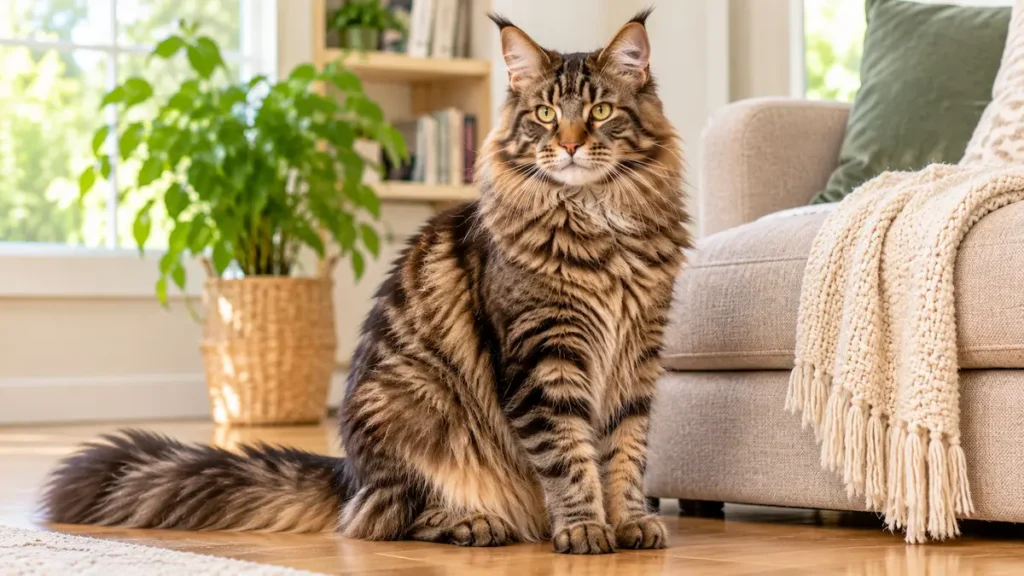
The Siberian, Maine Coon and Norwegian Forest Cat are all big, fluffy forest breeds, but the Siberian has a rounder head and body, the Maine Coon has a square muzzle and long, rectangular body, and the Norwegian Forest Cat has a triangular head and straight nose.
| Trait | Siberian | Maine Coon | Norwegian Forest Cat |
|---|---|---|---|
| Origin | Russia | United States | Norway |
| Male weight | 17–26 lb | 13–18 lb | About 12–16 lb |
| Head | Rounded, modified wedge | Square muzzle | Triangular, straight nose |
| Coat | Triple coat | Shaggy, uneven | Dense double coat |
| Full grown | 4–5 years | 3–5 years | Up to about 5 years |
| Lifespan | About 12–15 years | About 12–15 years | About 14–16 years |
| Typical price | $1,000–$2,500 | $400–$4,500 | About $900–$1,500 |
Wondering about Siberian vs Ragdoll? The Ragdoll is calmer, always blue-eyed and pointed, while the Siberian is more active and comes in every color; see our Ragdoll breed profile and Maine Coon breed profile.
Siberian cat history and origin
The Siberian is a naturally occurring breed from Russia, where it is the national cat, and it was mentioned by Harrison Weir in his 1889 book Our Cats and All About Them. Long-haired cats lived in Russian homes and farms for centuries before breeders refined them.
One of the first breed standards was written by the Kotofei Cat Club of St. Petersburg in 1987. Elizabeth Terrell imported the first three Siberians to the United States in 1990. TICA accepted the breed in 1992 and granted championship status in 1996, and the CFA accepted it in 2000 and granted championship status in 2006.
How to find a healthy Siberian kitten or adult
Buy a Siberian only from a registered breeder who shows parent health records and lets you visit, or adopt through a shelter or breed rescue. Use this checklist when you call.
- Ask about heart screening: request echocardiogram (heart scan) results for both parents.
- Check registration: the cattery should register with TICA or CFA and give you papers.
- Arrange an allergy visit if anyone at home has allergies, and ask about the return policy.
- Wait for the right age: good breeders place kittens at 12 weeks or older, after vaccines.
- Read the contract: look for a health guarantee, spay/neuter terms and a take-back promise.
- Consider adoption: search breed rescues and Petfinder for adult Siberians and mixes.
- The Siberian is Russia’s national cat.
- Its triple coat has three types of hair: guard, awn and downy undercoat.
- The first Siberians arrived in the US in 1990.
- Russian folklore says a new homeowner should let a cat enter the house first.
- Siberians take up to 5 years to reach full size.
Frequently asked questions
Are Siberian cats hypoallergenic?
No, Siberian cats are not hypoallergenic, although some individual Siberians may produce less of the Fel d 1 allergen. Allergy sufferers should spend time with the specific kitten before committing and talk to their doctor.
Do Siberian cats shed?
Yes, Siberians shed, mostly during heavy molts in spring and fall. Combing a few times a week, and more during molts, keeps loose undercoat under control.
How long do Siberian cats live?
Siberian cats usually live about 12 to 15 years, and some reach 18. Keeping them lean and active helps them live longer.
How big do Siberian cats get?
Male Siberians usually weigh 17 to 26 pounds and females 13 to 17 pounds when fully grown at 4 to 5 years. They stand about 9 to 11 inches tall.
How much does a Siberian cat cost?
A Siberian kitten usually costs about $1,000 to $2,500 from a US breeder in 2026. Shelter adoption, when available, costs about $75 to $200.
Why are Siberian cats so expensive?
Siberians cost more because they are still relatively rare in US registries (318 registered in 2024, per Cats.com data) and demand is high from people hoping for an allergy-friendlier cat. Health testing, registration and allergy visits add to the price.
Can Siberian cats be left alone?
An adult Siberian can handle a normal workday alone, but this communal breed dislikes long periods by itself. A second cat or daily interactive play helps if you are away often.
- Cats.com, Siberian cat breed information and Norwegian Forest Cat breed information
- PetMD, Siberian (reviewed by Barri J. Morrison, DVM)
- GCCF, Siberian breed profile
- Sartore S. et al. (2017). Polymorphism analysis of Ch1 and Ch2 genes in the Siberian cat. Veterinary Sciences 4(4):63. PMC
- Hepper, How much does a Siberian cat cost?, updated Jan 2026
- Cat Fanciers’ Association, Most popular breeds for 2026
- Embrace Pet Insurance, Maine Coon care guide (comparison data)
This guide is for education and does not replace a vet or allergist. Prices and rankings change; we review this page regularly.
Dr. Usama is a registered veterinarian (Pakistan Veterinary Medical Council license no. 9472). He earned his Doctor of Veterinary Medicine at The Islamia University of Bahawalpur and an MPhil in Zoology from the Virtual University of Pakistan, with research work at Bahauddin Zakariya University, Multan and the University of Veterinary and Animal Sciences, Lahore. He reviews every health and safety point on Happy Cat At Home and writes for US cat owners who want practical, honest advice. More about Dr. Usama · Editorial policy
Join the Happy Cat Club: one short, vet-reviewed email a week with breed guides, care tips, honest product picks and seasonal safety alerts. No spam, unsubscribe anytime.