Cat Anxiety: 12 Signs, Causes & How to Calm an Anxious Cat (2026 Vet Guide)

Registered Veterinary Medical Practitioner, PVMC license no. 9472
Updated November 12, 2026 · Sources listed at the end
What is cat anxiety, and how do you calm an anxious cat?
Cat anxiety is ongoing fear or worry, often triggered by changes at home, conflict with other pets, boredom, poor early socialization, or hidden pain. Signs include hiding, dilated pupils, over-grooming, litter box accidents, excessive meowing and sudden aggression.
To calm an anxious cat: have your vet rule out pain or illness, then give safe hiding spots and high perches, keep a steady routine, play daily, provide enough separate litter boxes and food stations, and consider pheromones or calming aids. Severe anxiety may need prescription medicine.
🍬 Best Calming Treats for Cats → 🧸 Calming Items Finder →
- 1. What is cat anxiety?
- 2. 12 signs of anxiety in cats
- 3. Common causes
- 4. Anxiety vs pain vs depression
- 5. 7 steps to calm an anxious cat
- 6. Vet visits, travel, fireworks, moving and new pets
- 7. Calming aids and prescription medicines
- 8. Common mistakes
- 9. When to see a vet and what to ask
- 10. FAQs
1. What is cat anxiety?
Fear is a normal, short reaction to a real threat, such as a loud noise. Anxiety is when a cat stays tense and on guard even when nothing is happening. Long-term stress affects health as well as behavior: it is linked to bladder inflammation (feline idiopathic cystitis), over-grooming and stomach upsets. Anxiety isn’t “bad behavior” and punishment makes it worse.
Reader discount
20% off Bailey’s CBD for cats with code HAPPYCAT
Valid through December 31, 2026. Enter the code at checkout on baileyscbd.com. Ask your vet before giving CBD, especially if your cat takes other medicines.
🌿 Calming Cat Chews → 💧 CBD Oil for Cats →Affiliate links: we may earn a commission at no extra cost to you.
2. 12 signs of anxiety in cats
Cats hide stress well, so small changes matter. Many of these signs can also mean pain, so check with your vet.
- Hiding: under beds, in closets or behind appliances for long periods.
- Dilated pupils and constant scanning: ears flicking toward small sounds.
- Ears turned back or flattened
- Tucked tail and low, crouched posture
- Over-grooming: licking the belly, legs or flanks until hair thins or bald patches appear.
- Litter box accidents or spraying: especially urine marking on walls and doors.
- Excessive meowing or yowling: often at night or when left alone.
- Reduced appetite: or eating only when no one is around.
- Restlessness and pacing: trouble settling or sleeping.
- Clinginess: following you room to room and getting upset when you leave.
- Sudden swatting, hissing or biting: especially when touched or startled.
- More scratching of doors and furniture: as a way of marking territory.
Over-grooming and hiding can also point to low mood; see signs of a depressed cat. Night yowling: see why is my cat crying?
3. Common causes of cat anxiety
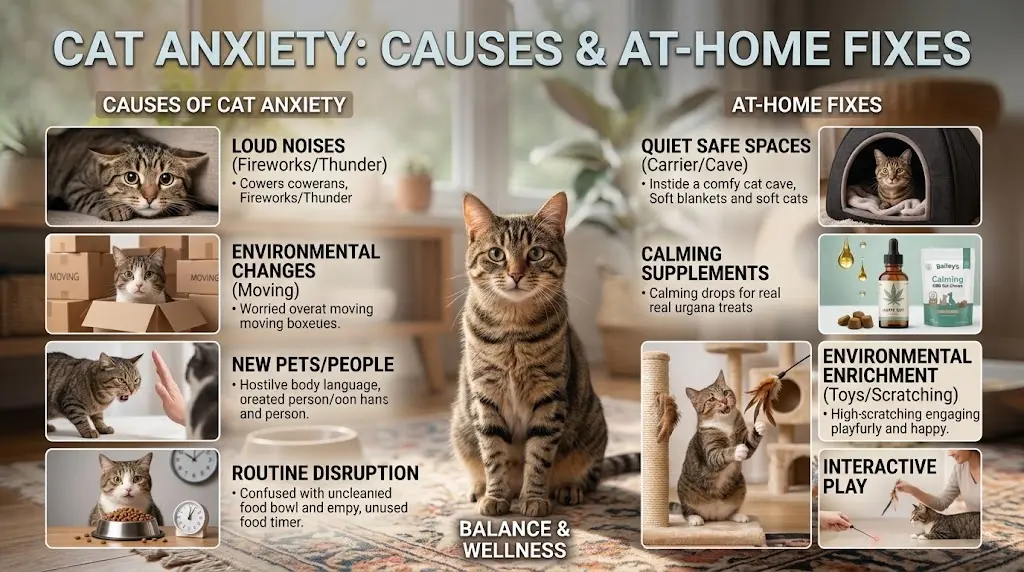
- Changes at home: moving, renovations, new furniture, visitors or a new baby.
- Conflict with other cats or pets: one cat may quietly block another from litter boxes, food or resting spots. See cat aggression toward other cats and introducing a cat to a dog.
- Boredom: indoor cats need to climb, hunt and explore. See indoor cat enrichment ideas.
- Poor early socialization: kittens with little gentle handling in roughly their first 2 to 7 weeks are more likely to be fearful later. See why is my cat scared of everything?
- Pain or illness: arthritis, dental disease, hyperthyroidism, bladder and gut problems can all make cats irritable or anxious.
- Being in heat: unspayed females can be restless and vocal. See how to calm a cat in heat.
4. Anxiety vs pain vs depression
| Feature | Anxiety | Pain | Low mood / depression |
|---|---|---|---|
| Posture | Tense, alert, ears back, wide pupils | Hunched, squinting, stiff movement | Flat, withdrawn, unkempt coat |
| Reaction to touch | Startles, may swat | Flinches or hisses when a sore area is touched | Little reaction |
| Play | Short, nervous bursts | Avoids jumping and chasing | Little interest |
| First step | Find and reduce triggers, enrichment | Vet exam and pain relief | Vet exam, routine, gentle play |
5. 7 steps to calm an anxious cat at home
Step 1: Rule out pain and illness
Ask your vet for an exam, and bloodwork or a urine test if needed. Arthritis, dental pain and bladder problems often look like “behavior”.
Step 2: Add hiding places and high perches
Cats feel safer when they can hide or watch from above. Give every main room a hiding box or cat bed and a shelf, tree or window perch. See cat-friendly vertical space ideas.
Step 3: Play like a hunt, every day
Use a wand toy for 10 to 15 minutes, once or twice a day: stalk, chase, pounce, catch. Let your cat “catch” a real toy at the end (if you use a laser, finish on a toy), then offer a meal or treat. See how to exercise a cat at home without stress.
Step 4: Give enough of everything, in separate places
Each cat should be able to reach food, water, a litter box, a scratching post and a resting place without passing another cat. Use one litter box per cat plus one. See where to put a litter box.
Step 5: Keep a predictable routine
Feed, play and clean litter at similar times each day. Let your cat choose when to be touched.
Step 6: Try pheromones
Plug-in diffusers that copy cats’ calming facial pheromones help some cats, especially during changes. Products for multi-cat tension are also available. Put them where your cat spends most time.
Step 7: Teach calm with small steps
For specific fears like the carrier or visitors, start with tiny exposures your cat can handle and pair them with treats. For example, leave the carrier out with a soft blanket and treats inside.
6. Vet visits, travel, fireworks, moving and new pets
For predictable stress such as vet visits, travel or fireworks, a calming chew given ahead of time helps some cats. Try one on a calm day first to check your cat eats it. See our vet-reviewed picks for the best calming treats for cats.
- Vet visits and travel: leave the carrier out all the time, cover it with a towel in the car, and ask your vet whether a pre-visit medicine would help.
- Fireworks and storms: keep your cat indoors, close curtains, play background sound, and provide a hiding place in an inner room.
- Moving house: set up one quiet “base room” with all essentials before letting your cat explore.
- New pets or people: introduce slowly, by scent first, and keep separate resources.
7. Calming aids and prescription medicines
Natural calming aids
These may help mild or situational anxiety, alongside changes at home. Results vary from cat to cat.
- L-theanine (an amino acid) and alpha-casozepine (a milk protein) are common in calming chews and capsules for cats.
- Pheromone diffusers and sprays.
- CBD products: research in cats is limited. If you try one, choose a pet product with third-party lab results showing THC and contaminant testing, and ask your vet first.
- Calming collars: see do cat calming collars work?
One option is Bailey’s, which makes CBD calming chews and CBD oil for cats.
🌿 See Bailey’s Calming Chews → 💧 See Bailey’s CBD Oil for Cats →
Affiliate links. Read more in our CBD for cats guide.
Medicines your vet may prescribe
- Gabapentin: often given a few hours before vet visits or travel to reduce fear.
- Fluoxetine or other daily anti-anxiety medicines: for ongoing anxiety, spraying or conflict between cats, together with behavior changes.
- Pain relief when arthritis or other pain is part of the problem.
Never give your cat human anxiety or pain medicines; many are toxic to cats.
8. Common mistakes when calming an anxious cat
- Punishing hiding, hissing, or accidents.
- Pulling a cat out of hiding or forcing cuddles.
- Skipping the vet and assuming it’s “just behavior”.
- Making many changes at once during an already stressful time.
- Only one litter box or food spot in a multi-cat home.
- Relying on a product alone without changing the environment.
- Using essential oils or human calming products, some of which are unsafe for cats. See is peppermint oil safe for cats?
9. When to see a vet, and what to ask
Book a vet visit if anxiety starts suddenly, your cat stops eating, over-grooms to bald patches, has litter box changes, becomes aggressive, or doesn’t improve after a few weeks of changes at home. For more on appetite loss, see why is my cat not eating?
Questions to ask your vet:
- Could pain or illness be causing this behavior?
- Which tests do you recommend?
- Would pheromones, a supplement or a diet help my cat?
- Is a pre-visit or daily medicine appropriate?
- Should we see a veterinary behaviorist?
10. Frequently asked questions
What are the signs of anxiety in cats?
Common signs include hiding, dilated pupils, ears turned back, a tucked tail, over-grooming, litter box accidents or spraying, excessive meowing, reduced appetite and sudden swatting or biting. Many of these can also be caused by pain, so a vet check is a good first step.
How do I calm an anxious cat?
Rule out pain with your vet, then give your cat hiding places and high perches, keep a predictable routine, play daily, provide enough litter boxes, food and water stations, and try pheromone diffusers. Your vet can add calming supplements or medicine if needed.
What is the fastest way to calm a panicking cat?
Give it a quiet, dim room with a hiding spot, reduce noise, and leave it alone until it comes out on its own. Don’t hold or force contact with a panicking cat, as it may scratch or bite.
How long does it take to calm an anxious cat?
A short fright can pass within minutes to hours. Ongoing anxiety from a move, a new pet or conflict between cats often takes several weeks of consistent changes to improve.
Can stress make my cat sick?
Yes. Stress is linked to bladder inflammation (feline idiopathic cystitis), over-grooming, stomach upsets and poor appetite. A cat with urinary signs or not eating needs a vet.
Do calming treats work for cats?
Some cats respond to calming chews containing ingredients such as L-theanine or alpha-casozepine, but results vary and they work best alongside changes at home. Try them on a calm day first and ask your vet, especially if your cat takes medicines.
Is CBD safe for anxious cats?
Research on CBD in cats is limited. If you try it, choose a pet product with third-party testing for THC and contaminants, start low, and check with your vet first, especially if your cat has liver disease or takes other medicines.
When should I take my anxious cat to the vet?
See a vet if anxiety appears suddenly, comes with litter box changes, appetite loss, over-grooming to bald patches or aggression, or doesn’t improve with changes at home. Straining to pee is an emergency.
- AAFP and ISFM: Feline Environmental Needs Guidelines; Feline-Friendly Handling Guidelines.
- Cornell Feline Health Center, Cornell University: feline behavior problems; feline lower urinary tract disease.
- Merck Veterinary Manual: behavioral problems of cats.
Disclosure: Happy Cat At Home is reader-supported; some links are affiliate links and we may earn a commission at no extra cost to you. This guide is educational and does not replace a veterinary exam. How we make money.