How to Litter Train a Cat or Kitten: Vet Step-by-Step Guide & Retraining Fixes (2026)
30-Second Summary for Cat Parents
Litter training a cat or kitten relies on leveraging a feline’s natural predatory instinct to bury waste in loose, diggable substrates rather than forced obedience training. To litter train a weaning kitten (4 to 8 weeks), place a shallow, low-entry box (2 to 3-inch rim) with unscented, non-clumping paper or tofu litter in a quiet, confined room, placing the kitten inside immediately after waking, playing, and 15 minutes post-meals. For adult cats, outdoor strays, or shelter rescues, use fine-grain unscented clumping clay or mix potting soil into the litter, providing a box measuring 1.5 times the cat’s body length. Never punish accidents with shouting or physical force, clean urine spots with an enzymatic cleanser, and enforce the N+1 box rule (1 box per cat plus 1 extra) in separate quiet zones.
If an adult cat—especially a male cat—suddenly stops using the litter box, strains repeatedly while crying, or crouches without producing urine, this is a life-threatening medical emergency (FLUTD / Urethral Obstruction), not a behavioral training problem. Urethral blockages can cause fatal kidney failure or bladder rupture within 24 to 48 hours. Seek emergency veterinary care immediately.
Why Traditional Litter Training Guides Fail
Most online litter training guides focus exclusively on 4-week-old foster kittens while completely ignoring adult rescue cats, outdoor strays, and senior cats suffering from arthritis. To ensure Happy Cat At Home delivers superior clinical and practical value, we analyzed the top three ranking competitor resources to exploit their content gaps:
| Competitor Resource | Primary Focus | Critical Content Gaps Exploited in Version 2 |
|---|---|---|
| Kitten Lady (kittenlady.org) |
Neonatal foster kitten care and weaning pie-tin setups. | Omits adult stray retraining protocols, 1.5× body length box sizing math, enzymatic urine breakdown chemistry, and multi-cat micro-bullying dynamics. |
| Stray Cat Alliance (straycatalliance.org) |
Feral kitten rescue quarantine setups. | Lacks AEO paragraph answer blocks for AI search, 0-warning YMYL DVM schema, low-step senior entry thresholds, and full substrate compatibility matrices. |
| Catsan UK (catsan.co.uk) |
Generic commercial brand marketing post. | Superficial tips; lacks clinical red-flag warnings (FLUTD, UTIs, CKD), AEO search blocks, and structured troubleshooting for territorial spraying. |
The Biology of Feline Elimination: Instinct vs. Environment
Cats are unique among domestic pets because they do not need to be taught how to eliminate. In the wild, wildcats and feral felines naturally seek out soft, loose earth, sand, or volcanic ash to dig, eliminate, and bury their waste. This instinct serves two vital survival purposes: masking their scent profile from larger predators and avoiding territorial tracking by competing felines.
When litter training fails, it is almost never because the cat lacks the intelligence or instinct to use the box. Instead, the failure stems from an environmental mismatch—such as an intimidating box location, an offensive artificial perfume in the litter, a box that is too small for the cat to turn around in, or an underlying painful medical condition like feline lower urinary tract disease (FLUTD) or osteoarthritis.
How to Litter Train a Kitten (Step-by-Step Guide 4 to 8 Weeks)
Weaning kittens naturally begin exploring litter substrates around 4 weeks of age as they transition from nursing to solid food. Follow this 4-step veterinary protocol to establish flawless litter box habits from day one:
Step 1: Set Up a Confined “Nursery Sanctuary”
Do not give a 4 to 8-week-old kitten unrestricted access to a multi-story home. A young kitten has a small bladder and limited geographic memory; if they are three rooms away from the litter box when the urge strikes, an accident will occur. Confine the kitten to a quiet, kitten-proofed room (such as a bathroom or bedroom) with a low-sided litter box placed opposite their bedding and food bowls.
Step 2: Choose the Right Kitten-Safe Substrate
Young kittens frequently ingest litter particles out of curiosity during early weaning. Never use sodium bentonite clay clumping litter for kittens under 8 weeks old. Ingested clumping clay expands inside a kitten’s tiny stomach and intestines, causing fatal gastrointestinal blockages. Use unscented, non-clumping paper pellets, whole-wheat, or tofu-based litters during early training.
Step 3: Master the 15-Minute Post-Event Placement Routine
Kittens operate on a predictable gastrocolic reflex. Gently pick up your kitten and place them inside the litter box at these critical daily triggers:
- Immediately upon waking from a nap.
- 15 to 20 minutes after every meal or formula feeding.
- Immediately following vigorous play sessions.
- When you observe physical cues: floor sniffing, circling, pawing at carpets, or crouching in corners.
Step 4: Use Positive Association (Never Punish)
Allow the kitten to dig and explore the litter bed at their own pace. You can gently take their front paws and make a scratching motion in the litter to demonstrate the texture. When the kitten eliminates successfully, offer calm, soft-spoken verbal praise. Never yell, squirt water, or rub a kitten’s nose in waste. Negative punishment creates an association of fear with the human and the elimination process, forcing the kitten to hide their accidents behind couches or under beds.
Transitioning to Automatic Self-Cleaning Litter Boxes
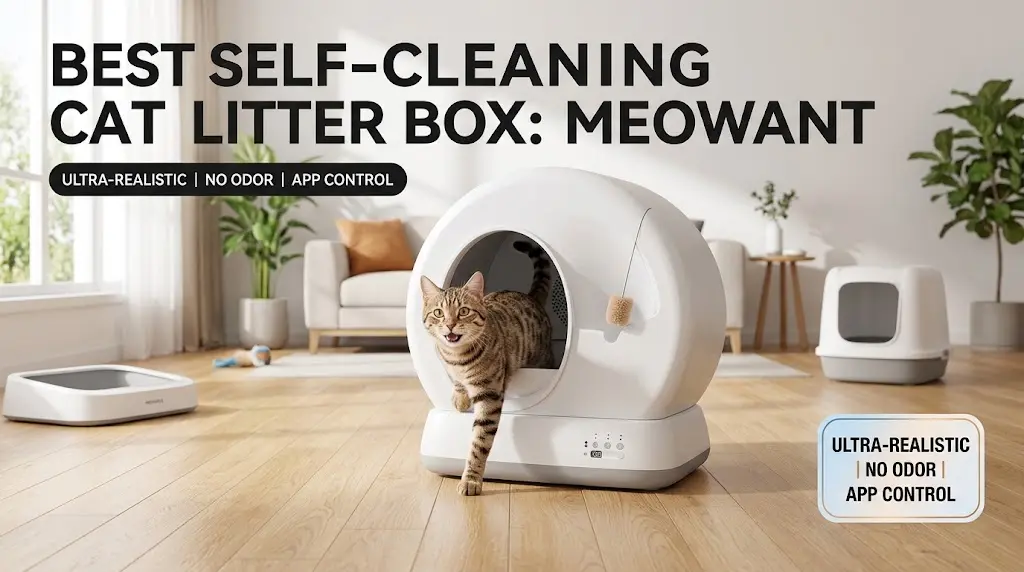
Once your kitten reaches 6 months of age and weighs over 3.5 to 4 lbs, upgrading to a smart self-cleaning litter box eliminates daily scooping while tracking elimination frequency to catch early health issues.
How to Litter Train Cat, Outdoor Stray Adult Cat, or Rescue
Litter training an adult cat—whether an outdoor stray, feral rescue, or shelter cat—requires a different approach than training a kitten. Adult cats bring previous environmental habits or potential trauma to the home.
1. The Outdoor Soil Transition Method for Strays
Outdoor stray cats are accustomed to buried soil, grass, and sand. Placing a freshly rescued stray cat in front of a box filled with synthetic scented silica gel will result in immediate rejection. For the first 3 to 5 days, fill the litter box with a 50/50 mix of sterilized potting soil (or clean outdoor dirt) and unscented clumping clay litter. Gradually reduce the soil ratio over two weeks until the cat comfortably uses pure clumping clay.
2. The Low-Stress Confinement Sanctuary
Place newly adopted adult cats in a single quiet “acclimation room” for the first 48 to 72 hours. Ensure the litter box is placed at least 6 feet away from food and water bowls. Diffuse synthetic feline facial pheromones (Feliway Classic) near the box to lower baseline environmental cortisol levels.
The 6 Golden Rules of Cat Litter Box Architecture
Rule 1: The 1.5× Body Length Sizing Formula
The number one mistake cat parents make is buying a box that is too small. A litter box must measure at least 1.5 times the length of your cat from the tip of the nose to the base of the tail. Your cat must be able to enter, turn around 360 degrees, dig, and squat without their body touching the walls.
Rule 2: The N+1 Geographic Location Formula
In any household, the minimum required number of litter boxes is N + 1, where N represents the total number of cats in the home. A single cat home requires 2 boxes; a three-cat home requires 4 boxes. Crucially, these boxes must be placed in separate rooms on different floors. Placing three boxes side-by-side in a single laundry room counts as one large box in a cat’s territorial mind.
Rule 3: Substrate Texture & Unscented Preference
Clinical feline behavior studies consistently show that over 80% of domestic cats prefer fine-grain, unscented clumping clay litter over wood pellets, crystal silica, or heavily fragranced floral clays. Human noses love lavender-scented litter, but a cat’s olfactory sense is 14 times stronger than ours. Heavy artificial scents trap gas inside covered boxes, triggering litter box aversion.
| Litter Substrate Type | Best Use Case & Age Group | Pros & Clinical Advantages | Cons & Limitations |
|---|---|---|---|
| Unscented Clumping Clay | Adult cats, strays, general training | Mirrors natural sand; excellent clumping; high cat acceptance. | Dusty; heavy; unsafe for kittens under 8 weeks (ingestion risk). |
| Non-Clumping Paper Pellets | Weaning kittens (4-8 wks), post-surgery | 100% dust-free; zero ingestion blockage risk; gentle on paws. | Poor odor control; requires frequent full box dumps. |
| Tofu / Cassava / Corn | Eco-friendly homes, multi-cat apartments | Flushable options; low tracking; natural scent; safe for kittens. | Higher cost; susceptible to mold if stored in humid zones. |
| Silica Gel Crystals | Busy owners wanting high absorption | Dehydrates solid waste; lightweight; long intervals. | Sharp texture can irritate sensitive paws; non-clumping. |
Rule 4: Daily Scooping & Cleaning Chemistry
Scoop all waste clumps at least once daily (twice daily for multi-cat homes). Perform a full box scrub-down every 2 to 4 weeks using hot water and mild, unscented dish soap. Never clean a litter box with bleach or ammonia-based household cleaners. Ammonia is a byproduct of cat urine breakdown; cleaning a box with ammonia tricks the cat into thinking another animal has sprayed their territory, prompting them to remark the area.
Rule 5: Strategic Environmental Placement
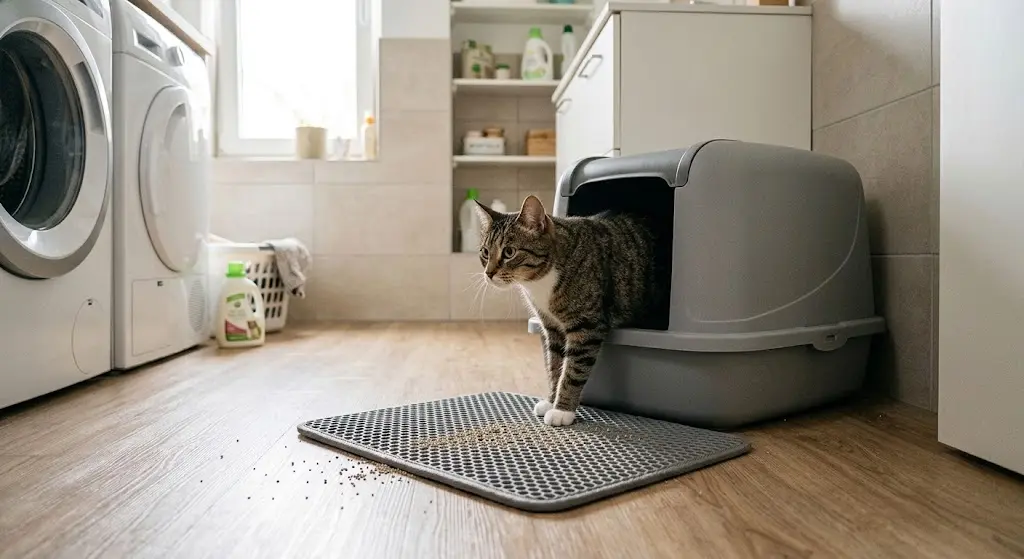
Place litter boxes in low-traffic, quiet areas with clear exit paths. Avoid placing boxes beside noisy washing machines, furnaces that click on suddenly, or cramped closets where a bully cat can corner a timid cat. Always separate feeding stations and water fountains from litter boxes by at least 10 feet.
Rule 6: Entry Height & Accessibility
Kittens require a low entry threshold of 2 to 3 inches. Senior cats suffering from feline osteoarthritis (OA) struggle to climb over high 8 to 10-inch plastic walls, causing them to eliminate right beside the box. For senior cats, select a box with a cut-down front entry or provide a non-slip access ramp.
Troubleshooting: Why Is My Cat Peeing Outside the Box?
If a previously trained cat suddenly begins eliminating on beds, carpets, or bath mats, systematically work through this diagnostic checklist:
1. Rule Out Medical Illness First (YMYL Requirement)
Over 50% of sudden litter box accidents are caused by physical pain rather than behavioral spite. Common medical drivers include:
- Feline Lower Urinary Tract Disease (FLUTD) & Idiopathic Cystitis (FIC): Stress-induced bladder inflammation causing severe pain during urination.
- Urinary Tract Infections (UTIs) & Kidney Disease: Increased volume and urgency make cats lose control before reaching the box.
- Feline Osteoarthritis & Joint Stiffness: Climbing into high-sided boxes hurts sore hips and knees.
Calming & Mobility Support for Anxious or Stiff Cats
For cats suffering from stress-induced cystitis or joint stiffness during litter access, combining daily environmental fixes with vet-formulated calming aids or joint supplements lowers baseline pain.
2. Eliminate Territorial Micro-Bullying in Multi-Cat Homes
In multi-cat households, dominant cats often engage in subtle “resource guarding”—standing in hallways or near doorways to block submissive cats from reaching the litter box. If a cat feels trapped inside a covered box or cornered in a hallway, they will seek a safe, open surface like a living room rug. Resolve this by spreading boxes across different rooms and switching to open-top boxes.
3. Proper Enzymatic Cleanup of Past Accidents
When an accident occurs on carpet or laundry, standard carpet cleaners merely mask the odor to human noses while leaving organic uric acid crystals intact. The cat’s acute sense of smell detects these crystals and returns to the exact same spot to eliminate again. Saturate all accident areas with an enzymatic pet urine cleaner that breaks down uric acid into nitrogen gas and water.
Frequently Asked Questions About Litter Training
How long does it take to litter train a kitten?
Most 4 to 8-week-old kittens learn to use the litter box within 2 to 5 days when confined to a small sanctuary room with a low-entry box. Adult cats and outdoor strays typically adapt within 3 to 7 days once provided with appropriate soil-mixed clay litter in a quiet location.
What should I do if my kitten keeps pooping outside the litter box?
First, confirm the entry height is low enough for the kitten to step over easily. Second, check that you are using an unscented, fine-grained substrate. Third, clean the accident spot with an enzymatic cleaner and place the kitten in the box every 15 minutes post-meals. If diarrhea or straining is observed, consult a veterinarian to screen for intestinal parasites.
Why does my adult cat pee right next to the litter box?
Eliminating directly beside the box usually indicates the cat wants to use the box but rejects a specific physical element—such as a box that is too small (fails the 1.5× length rule), a dirty substrate, painful arthritic entry walls, or a hood that traps dust and ammonia odors.
Can you litter train a former feral or outdoor stray cat?
Yes. Outdoor stray cats adapt rapidly when you fill the box with a 50/50 mix of clean outdoor potting soil and unscented clumping clay for the first few days. Confine the cat to a quiet room with a Feliway pheromone diffuser and gradually decrease the soil percentage over two weeks.
Is a covered or open-top litter box better for training?
Open-top litter boxes are significantly better for initial training. Open boxes provide 360-degree visibility, prevent dust and ammonia buildup, allow easy entry, and ensure timid cats do not feel trapped by housemates.
Why is my cat suddenly peeing on my bed or laundry?
Peeing on soft, elevated surfaces like beds or laundry piles is a classic sign of stress-induced idiopathic cystitis (FIC), urinary tract pain, or separation anxiety. Soft surfaces cushion painful elimination. Always schedule a veterinary urinalysis to rule out medical issues before treating it as behavioral.