Home › Cat Breeds › Ragdoll Cat
Ragdoll Cat: Size, Personality, Lifespan, Price and Breed Facts (Vet-Reviewed)
 Written & medically reviewed by Dr. Muhammad Usama, DVM, RVMP· PVMC license no. 9472
OriginUnited States (California)
Height9–11 inches
Adult weight10–20 lb (males 15–20)
Life span12–15 years
Is a Ragdoll cat right for you?
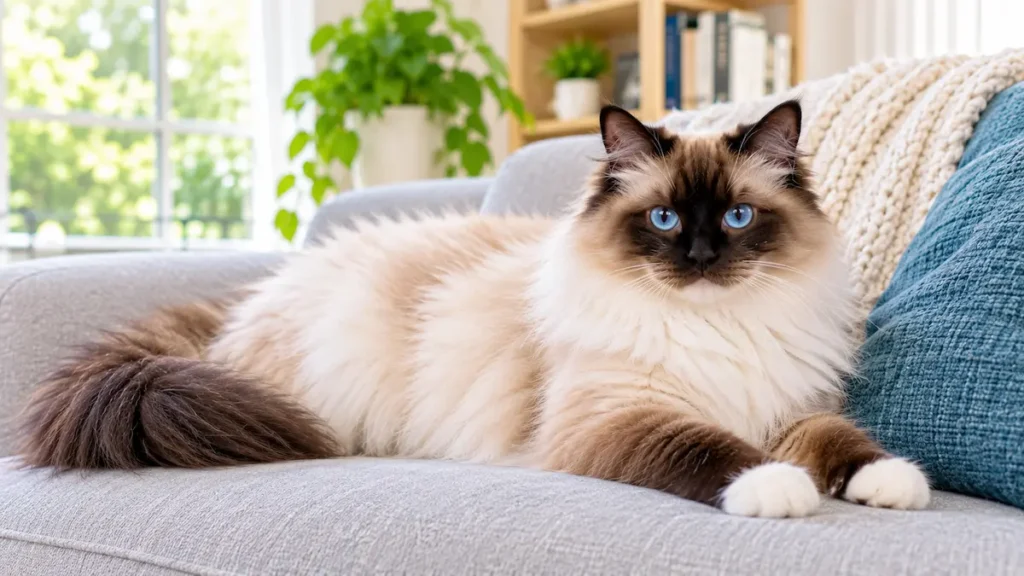
The Ragdoll is a large, blue-eyed, semi-longhaired cat from California, famous for going limp in your arms: males usually weigh 15 to 20 pounds, females 10 to 15 pounds, and most live about 12 to 15 years. It suits families, first-time owners, apartments and homes with kids or other pets that want a calm, cuddly lap cat. It is a poor fit if you need a hypoallergenic cat, want a high-energy athlete, or are away most of the day.
- 📏 Size: one of the largest breeds; full size at about 3 years
- ❤️ Personality: gentle, affectionate, quiet, loves being held
- 🩺 Health watch: hypertrophic cardiomyopathy (HCM), bladder stones, obesity
- 💰 Price: about $1,200 to $3,000 for a pet-quality kitten; rescues and retired breeders cost less
Ragdoll quick facts
The Ragdoll is a large, laid-back American breed with blue eyes, a soft semi-long coat and a pointed color pattern like a Siamese. Every figure below comes from a registry, vet or breed source listed at the end of this guide.
- Origin
- Riverside, California, USA (1960s)
- Breed group
- Large, semi-longhair
- Height
- About 9 to 11 inches at the shoulder
- Adult weight
- Males 15 to 20 lb · females 10 to 15 lb
- Full grown
- About 3 years; full coat color by 2 to 4 years
- Lifespan
- About 12 to 15 years
- Coat
- Soft, silky semi-longhair with less woolly undercoat
- Eyes
- Blue in every purebred Ragdoll
- Shedding
- Moderate; peaks in spring and fall
- Temperament
- Sweet, easygoing, gentle, quiet
- Good with kids and pets
- Yes, usually very tolerant
- Hypoallergenic
- No
- Popularity
- #2 by US registrations in 2024 (3,043 cats)
- Other names
- “Gentle Giant”
Ragdoll breed scorecard
On our 1 to 5 scale, the Ragdoll scores highest for affection, kid-friendliness and first-time-owner fit, and lowest for activity and vocal level. These are editorial ratings by Dr. Usama based on the sources below; individual cats vary.
- AffectionSeeks out its people, follows them around and often sleeps on the bed. 5/5
- PlayfulnessGentle play, often with claws kept in; kitten energy fades by 2 to 4 years. 3/5
- Activity levelLow-energy and nap-loving, which makes weight gain easy. 2/5
- Grooming needSilky coat mats less than woolly coats, but still needs frequent combing. 4/5
- SheddingSheds less than thick-undercoat breeds; heavier in spring and fall. 3/5
- VocalQuiet and soft-voiced; rarely demands attention loudly. 2/5
- Kid-friendlyPatient with children and tolerant of being carried. 5/5
- Pet-friendlyUsually gets along with dogs and other cats. 5/5
- Inherited health riskA known HCM gene (R820W) plus bladder stones and obesity risk. 3/5
- First-time owner fitCalm, adaptable and easy to handle; main work is combing and portion control. 5/5
Is a Ragdoll right for you? Good fit vs not a good fit
A Ragdoll is right for you if you want a calm, cuddly indoor companion and can keep it lean and well groomed. Check this list before you contact a breeder or rescue.
- Want a lap cat that likes being held
- Live in an apartment or a quiet home
- Have gentle kids, a cat-friendly dog or another cat
- Can comb several times a week
- Will keep the cat strictly indoors
- Need a hypoallergenic cat (see cat breeds for people with allergies)
- Want an active, climbing, adventurous cat
- Are away for long hours most days
- Want an outdoor cat (Ragdolls are too trusting outside)
- Can’t budget for heart screening and quality food
Ragdoll personality and temperament
Ragdolls are known for a sweet, relaxed and people-focused temperament: they love being held, follow their owners from room to room and are usually gentle with children and other pets. The breed’s name comes from its habit of relaxing completely, like a rag doll, when picked up.
A typical Ragdoll wants to be part of whatever you are doing without causing chaos. Many greet you at the door, sit nearby while you work and sleep on the bed at night. They are less likely than busy breeds to knock things off shelves, and many play gently without using their claws.
Ragdolls are smart and respond well to positive reinforcement, so many learn simple tricks, fetch or walking on a harness. Some even show an unusual interest in water and will sit on the edge of the tub. They are quiet cats, so a Ragdoll that suddenly cries a lot may be unwell or stressed; see why your cat is crying.
Are Ragdolls good with kids and dogs?
Yes, Ragdolls are one of the most child- and dog-friendly cat breeds because they are patient, tolerant of handling and rarely aggressive. That gentleness means they may not defend themselves, so teach children to support the back legs when lifting and introduce dogs slowly; our guide to introducing a cat to a dog explains how.
Can Ragdolls be left alone?
An adult Ragdoll can manage a normal workday alone, but this social breed does best with company and gets lonely with long daily absences. A second calm cat, window perches and puzzle feeders help. Read how long you can leave a cat alone before planning trips.
Ragdoll size: how big do Ragdoll cats get?
Adult male Ragdolls usually weigh 15 to 20 pounds and females 10 to 15 pounds, standing about 9 to 11 inches tall at the shoulder. Their long, broad body and heavy bones make them look even bigger than the scale suggests, which is why they rank among the largest domestic breeds alongside the Maine Coon.
When is a Ragdoll fully grown?
A Ragdoll is usually fully grown at about 3 years old, and its final coat color is not settled until around 2 to 4 years. Most house cats reach adult size at about 1 year, so Ragdoll owners should expect steady growth long after kittenhood.
| Age | Ragdoll growth stage | What to do |
|---|---|---|
| Birth | Kittens are born white; points start to darken in the first weeks | Stay with mother; breeder handles early care |
| 3 to 12 months | Fast growth in length and frame | Kitten food in measured meals; see our kitten feeding chart |
| 1 to 2 years | Still filling out; HCM signs in high-risk cats may appear | Adult food; ask your vet about heart screening |
| 2 to 4 years | Full size and final coat color | Watch weight closely as activity drops |
Ragdoll size vs a normal cat
A full-grown Ragdoll is noticeably longer and heavier than an average domestic cat. Plan for a larger litter box and sturdier furniture. Not sure your fluffy, blue-eyed cat is a Ragdoll? Looks can’t confirm it, but a cat DNA test can.
Ragdoll colors and patterns
Purebred Ragdolls come in six point colors (seal, blue, chocolate, lilac, red and cream) and four main patterns (colorpoint, mitted, bicolor and van), always with blue eyes. Points can also be solid, tortie or lynx (tabby striped). Kittens are born white and their color develops over the first 2 years.
- Seal point
- Blue point
- Chocolate point
- Lilac point
- Red (flame) point
- Cream point
| Pattern | What it looks like |
|---|---|
| Colorpoint | Dark ears, face, legs and tail on a lighter body; no white |
| Mitted | Like colorpoint, plus white “mittens” on the front paws, white back boots and a white chin |
| Bicolor | Dark ears, mask and tail with an inverted white “V” on the face, white legs and belly |
| Van | Mostly white body with color only on the ears, mask and tail |
Are brown, white, orange, black or cinnamon Ragdolls real?
Most “brown,” “white” and “orange” Ragdolls people search for are standard colors described differently: a “brown” Ragdoll is usually seal point, “white” is often a young kitten or a van, and “orange” is a red or flame point. Solid black and cinnamon cats are not part of the CFA Ragdoll standard, so a solid black “Ragdoll” or one with green or gold eyes is most likely a Ragdoll mix or a different breed. A DNA test can tell you.
Swatches are simple color guides, not photos. Registries (CFA, TICA) differ slightly on which colors they accept.
Ragdoll care: food, grooming, exercise and litter box
Ragdoll care centers on three things: portion control, frequent combing and daily gentle play. Their low energy is lovely on the couch but makes weight gain one of the most common problems in the breed.
Nutrition
Feed a Ragdoll a high-protein, complete cat food in measured meals, because this low-energy breed gains weight easily. Weigh portions instead of free-feeding and adjust to body condition. Use our cat feeding calculator, and if your Ragdoll is already heavy, see how to help your cat lose weight safely and our best cat food for weight loss.
Grooming
Comb a Ragdoll several times a week, and daily during the spring and fall sheds, to prevent mats behind the ears, under the legs and on the britches. Their silky coat has less woolly undercoat than many longhairs, so a steel comb plus a gentle slicker usually does the job; see our best brushes for long-haired cats. Trim nails every 2 to 4 weeks and start tooth brushing early.
Exercise and enrichment
A Ragdoll needs at least two short play sessions a day to stay fit, because it rarely exercises on its own once adult. Wand toys, puzzle feeders and a sturdy, low-step cat tree with a window view work well; see the best cat trees for large cats and indoor enrichment ideas.
Litter box and water
A full-grown Ragdoll needs an extra-large litter box, about 1.5 times its body length, with a low entry. See what size litter box your cat needs and our large-cat picks in the best litter boxes for big cats. Because Ragdolls are prone to bladder stones, encourage drinking with wet food and an easy-to-clean water fountain.
Ragdoll health problems and lifespan
The main health problems in Ragdolls are hypertrophic cardiomyopathy (HCM), bladder stones, polycystic kidney disease (PKD) and obesity. Gene testing and a lean body weight prevent or catch most of them early.
Hypertrophic cardiomyopathy (HCM)
HCM is a thickening of the heart muscle, and Ragdolls have their own gene variant for it, called MYBPC3 R820W. About 30% of Ragdolls carry this variant, according to WebMD. The UC Davis Veterinary Genetics Laboratory reports that cats with one copy are not expected to have a higher risk and may live a normal lifespan, while cats with two copies are at high risk, with severe signs often appearing at 1 to 2 years. A DNA test reports N/N (clear), N/HCMrd (one copy) or HCMrd/HCMrd (two copies). Because a negative gene test does not rule out every form of HCM, ask your vet about a heart ultrasound if a murmur is heard.
Bladder stones
Bladder stones are mineral stones in the urinary bladder that cause straining, frequent small pees or blood in the urine. A male cat straining with little or no urine is an emergency, because a blocked urethra can be fatal within a day or two. More water and a vet-recommended diet lower the risk.
Polycystic kidney disease (PKD)
PKD causes fluid-filled cysts in the kidneys and is listed as a Ragdoll concern; Persians, a likely ancestor of the breed, are well known for it. Ask whether the parents were tested, and keep up with yearly bloodwork as your cat ages.
Obesity
Obesity is the most preventable Ragdoll health problem, because the breed is large, calm and food-loving. Extra weight strains joints and the heart; keep ribs easy to feel under a thin layer of fat.
How long do Ragdoll cats live?
Most Ragdolls live about 12 to 15 years. WebMD notes the average may be closer to 12 years and that only 63% live past age 10, which is shorter than many popular breeds, so heart testing, weight control and regular dental care really matter.
How much is a Ragdoll cat?
A pet-quality Ragdoll kitten from a US breeder typically costs about $1,200 to $2,300 according to Cats.com, while Floppycats’ 2026 price guide puts pet-quality kittens at $1,500 to $3,000. Show and breeding cats cost much more, while retired breeders and rescues are the most affordable way to get a Ragdoll.
| Type of Ragdoll | Typical US cost | Notes |
|---|---|---|
| Pet-quality kitten | $1,200–$2,300 (Cats.com); $1,500–$3,000 (Floppycats, May 2026) | Usually sold spayed or neutered, or with a contract |
| Show-quality (altered) | $3,000–$5,500+ (Floppycats) | Closer to the breed standard |
| Breeding rights | $3,500–$8,000+ (Floppycats) | Only for registered catteries |
| Retired breeder | $350–$1,500 (Floppycats) | Adult, already spayed or neutered |
| Rescue or rehoming | $200–$500 (Floppycats) | Purebred Ragdoll rescues are rare |
Price depends on quality, color, location and what’s included. Rarer colors such as tortie, cream, lilac and flame may cost more, East Coast prices tend to be higher, and a good price should include vaccines, a microchip, spay or neuter and parents’ gene tests.
Ragdoll vs Maine Coon vs Ragamuffin
The quickest way to tell a Ragdoll from a Maine Coon is the eyes and coat pattern: Ragdolls always have blue eyes and pointed coloring, while Maine Coons have green, gold or copper eyes and a shaggy tabby or solid coat. The Ragamuffin, a Ragdoll offshoot, allows any color and eye color.
| Trait | Ragdoll | Maine Coon | Ragamuffin |
|---|---|---|---|
| Origin | California, 1960s | Maine, 1800s | US, 1990s (from Ragdolls) |
| Male weight | 15–20 lb | 13–18 lb | 14–20 lb |
| Eyes | Always blue | Green, gold or copper | Blue, green or gold |
| Colors | Pointed patterns only | Most colors except pointed | Many colors, including solids |
| Key gene test | HCM (R820W) | HCM (A31P), SMA | HCM (R820W) |
Want the full picture on the other giant? Read our Maine Coon breed profile.
Ragdoll history and origin
The Ragdoll was created in Riverside, California, in the 1960s by breeder Ann Baker, starting with a white longhaired cat named Josephine whose kittens had unusually calm, friendly temperaments. Baker selected for temperament, large size and Himalayan-style points, and Persian, Burmese and Birman-type cats likely contributed to the breed.
Baker founded her own registry and trademarked the Ragdoll name, but breeders who left her group in the 1970s developed the standards later adopted by the major registries. TICA granted championship status in 1979, and the CFA followed with registration in 1993 and championship status in 2000. Another group of breeders later developed the Ragamuffin from Ragdoll lines.
How to find a healthy Ragdoll kitten or adult
Buy a Ragdoll only from a breeder who shows HCM (R820W) gene results for both parents, or adopt a retired breeder or rescue. Use this checklist when you call.
- Ask for gene results: both parents should be N/N for the Ragdoll HCM gene; ask about PKD testing too.
- Check registration: the cattery should register with TICA or CFA and give you papers.
- See the kittens’ home: visit or do a live video call and meet the mother.
- Wait for the right age: good breeders place kittens at 12 weeks or older, after vaccines.
- Read the contract: look for a health guarantee, spay/neuter terms and a take-back promise.
- Consider an adult: retired breeders and rescues on Petfinder are calmer and cheaper.
- Ragdoll kittens are born pure white; their points darken over the first two years.
- Every purebred Ragdoll has blue eyes.
- The breed’s founder, Ann Baker, once trademarked the name “Ragdoll.”
- Ragdolls ranked #2 by US registrations in 2024, with 3,043 cats registered.
- Many Ragdolls go limp when picked up, which is how the breed got its name.
Frequently asked questions
Do Ragdoll cats shed a lot?
Ragdolls shed moderately, less than breeds with a thick woolly undercoat, with heavier shedding in spring and fall. Combing several times a week keeps loose hair off your furniture and prevents mats.
Are Ragdoll cats hypoallergenic?
No, Ragdolls are not hypoallergenic. Cat allergies come from proteins in saliva, dander and urine, which all cats produce. If you have allergies, spend time with a Ragdoll first and compare breeds that may suit allergy sufferers.
What is the average Ragdoll lifespan?
The average Ragdoll lives about 12 to 15 years. Heart disease and obesity are the main threats, so choose a gene-tested kitten and keep your cat lean.
How big does a full-grown Ragdoll get?
A full-grown male Ragdoll usually weighs 15 to 20 pounds and a female 10 to 15 pounds. They reach full size at about 3 years old.
How much is a Ragdoll kitten?
A pet-quality Ragdoll kitten usually costs about $1,200 to $3,000 in the US. Show and breeding cats cost more, while retired breeders and rescues usually cost a few hundred dollars.
Are Ragdolls indoor cats?
Yes, Ragdolls should be kept indoors because their trusting, non-defensive nature puts them at risk outside. A secure catio or harness walks give safe outdoor time.
Do all Ragdolls have blue eyes?
Yes, every purebred Ragdoll has blue eyes. A “Ragdoll” with green or gold eyes is most likely a mix or a related breed such as a Ragamuffin.
- Cats.com, Ragdoll breed information
- WebMD Pets, What to know about a Ragdoll cat and What to know about Ragamuffins
- UC Davis Veterinary Genetics Laboratory, Hypertrophic Cardiomyopathy (HCM) in Ragdolls
- Floppycats, How much does a Ragdoll cat cost? (2026 price guide), updated May 2026
- Embrace Pet Insurance, Maine Coon care guide (comparison data)
- Cat Fanciers’ Association, breed standards
This guide is for education and does not replace a vet exam. Prices and rankings change; we review this page regularly.
Dr. Usama is a registered veterinarian (Pakistan Veterinary Medical Council license no. 9472). He earned his Doctor of Veterinary Medicine at The Islamia University of Bahawalpur and an MPhil in Zoology from the Virtual University of Pakistan, with research work at Bahauddin Zakariya University, Multan and the University of Veterinary and Animal Sciences, Lahore. He reviews every health and safety point on Happy Cat At Home and writes for US cat owners who want practical, honest advice. More about Dr. Usama · Editorial policy
Join the Happy Cat Club: one short, vet-reviewed email a week with breed guides, care tips, honest product picks and seasonal safety alerts. No spam, unsubscribe anytime.