What Size Litter Box Does My Cat Need? 1.5× Sizing Formula, Dimensions & Vet Guide (2026)
30-Second Summary for Cat Parents
A cat litter box should be at least 1.5 times the length of your cat’s body, measured from the tip of the nose to the base of the tail (excluding the tail). For an average 16-inch cat, the minimum usable interior length is 24 inches. A box is only large enough if your cat can enter, turn around 360 degrees, dig, squat, and cover waste without touching the sides or crouching under a hood.
Commercial labels like “Large”, “XL”, or “Jumbo” are unstandardized marketing terms. Always measure the usable interior floor space rather than exterior plastic footprints—especially when evaluating automatic, covered, or self-cleaning litter boxes.
Choosing the correct litter box size is one of the single most critical environmental decisions for an indoor cat parent. In feline clinical practice, over 40% of inappropriate elimination cases—cats urinating on carpets, beds, or clothes—stem from cramped, inadequate litter boxes rather than behavioral rebellion.
When a litter box is too small, a cat cannot execute their natural feline elimination sequence: inspecting, digging a pit, squatting with a straight spine, turning 180 degrees, and burying waste. This guide breaks down the clinical 1.5× measurement formula, exact interior dimension targets, sizing for Maine Coons and large breeds, low-step entry heights for senior cats, and how to evaluate automatic self-cleaning globe dimensions.
The Clinical 1.5× Litter Box Sizing Rule Explained
Veterinary behaviorists from the American Association of Feline Practitioners (AAFP) and International Society of Feline Medicine (ISFM) establish that a rectangular litter box must measure at least 1.5 times the cat’s nose-to-tail-base length.
Elimination is an active physical process. A cat does not simply step into a box and squat; they must comfortably circle, excavate litter, adopt a natural posture without spinal curvature, and cover their stool without brushing against soiled walls or rim edges. A 2025 peer-reviewed study on feline elimination preferences demonstrated that cats show a statistically significant preference for boxes measuring 50 cm (20 inches) or larger, directly correlating with the 1.5× body length threshold.
How to Measure Your Cat for a Litter Box in 3 Steps
Determining your cat’s exact litter box requirement takes less than 60 seconds with a soft fabric measuring tape:
- Step 1: Position Your Cat Naturally: Measure while your cat is standing relaxed or lying extended on a flat surface. Do not stretch or stress the animal.
- Step 2: Measure Nose to Tail Base: Place the start of the tape at the tip of the nose, follow the curve of the spine, and stop at the base of the tail.
- Step 3: Multiply Body Length by 1.5: Apply the formula:
Minimum Interior Length = Body Length × 1.5.
- 12-inch Cat (Small/Kitten): 12 in × 1.5 = 18 inches minimum interior length
- 14-inch Cat (Average Adult): 14 in × 1.5 = 21 inches minimum interior length
- 16-inch Cat (Large Adult): 16 in × 1.5 = 24 inches minimum interior length
- 18-inch Cat (XL Breed): 18 in × 1.5 = 27 inches minimum interior length
- 20+ inch Cat (Maine Coon / Ragdoll): 20 in × 1.5 = 30+ inches minimum interior length
Cat Litter Box Size Chart by Body Length & Breed
Use this clinical reference table to match your cat’s physical dimensions to practical litter box categories. Remember that weight alone is a poor indicator of size; a stocky 12-lb cat may be shorter than a lean 12-lb cat.
| Cat Body Length | Calculated Min. Length | Recommended Box Category | Ideal Usable Interior Dimensions | Typical Feline Breeds / Life Stages |
|---|---|---|---|---|
| 10 – 12 in | 15 – 18 in | Medium Pan | 18″ L × 14″ W × 5″ H | Kittens, Munchkins, Singapura, Small Females |
| 13 – 15 in | 19.5 – 22.5 in | Large Pan | 22″ L × 16″ W × 6″ H | Domestic Shorthair, Siamese, Russian Blue |
| 16 – 18 in | 24 – 27 in | Extra-Large (XL) | 27″ L × 19″ W × 7″ H | British Shorthair, Bengal, Large Male Adults |
| 19 – 20 in | 28.5 – 30 in | Jumbo / XXL Pan | 30″ L × 20″ W × 8″ H | Ragdoll, Norwegian Forest Cat, Overweight Cats |
| 21 – 24+ in | 31.5 – 36+ in | Custom Heavy-Duty / Storage Tote | 36″ L × 22″ W × 10″ H | Maine Coon, Savannah Cat, Giant Crossbreeds |
Interior vs. Exterior Dimensions: The Usable Space Trap
The single biggest purchasing error cat owners make is trusting the external dimensions printed on the box packaging. Manufacturers measure total exterior plastic width, including wide outer handles, thick double-wall moldings, motors, and rounded decorative rims.
A litter box listed as 24" L × 18" W on Amazon or Chewy may actually provide only 19" L × 13" W of usable interior sand bed space. Always inspect the interior floor basin dimensions before purchasing.
Critical Dimensions Beyond Length:
- Interior Width: A box should be wide enough for your cat to make a full 360-degree turn without their whiskers or flank touching the side walls. A good rule of thumb is an interior width at least equal to the cat’s full body length.
- Side Wall Height: For high-peeing cats or vigorous diggers, side walls should extend 8 to 12 inches high to contain spray and litter scatter.
- Entry Step Height: The height of the front entrance where the cat steps into the box. Healthy adults thrive on a 5 to 7-inch entry, while senior cats require a low-step entry under 3 to 4 inches.
Litter Box Sizing for Large Breeds & Maine Coons
Large feline breeds like Maine Coons, Ragdolls, Norwegian Forest Cats, and Savannahs frequently outgrow every commercial litter box sold in standard pet stores. A full-grown male Maine Coon can easily measure 20 to 24 inches from nose to tail base, requiring a massive 30 to 36-inch interior litter bed.
When a large cat is forced to use a standard 20-inch box, they are forced to stand with their front paws on the plastic rim while their rear hangs over the back, causing stool or urine to land on the floor. If commercial XL boxes are too cramped, many veterinary behaviorists recommend creating a custom DIY box using a 30 to 50-gallon clear plastic storage tote with an entrance cutout on the short side.
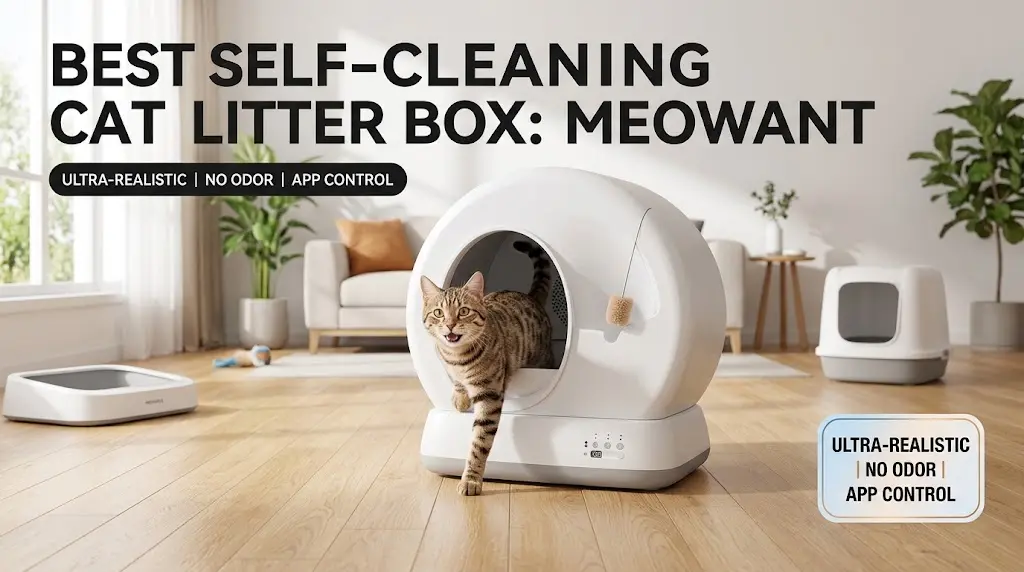
If you prefer an automatic self-cleaning litter box for a large cat, focus on open-top automatic models or extra-large globe units rather than tight enclosed spheres. See our complete comparison of 5 Best Self-Cleaning Cat Litter Box Brands for large-cat models like the Meowant SC10 and CATLINK Open-X.
Sizing Considerations for Senior Cats & Kittens
Senior Cats & Arthritic Felines (Feline OA)
Over 60% of cats over age 6—and 90% of cats over age 12—suffer from feline osteoarthritis. For an arthritic senior cat, stepping over a 7-inch plastic wall causes sharp joint pain in the hips and stifles. Senior cats need a low-entry threshold (2.5 to 3.5 inches high) paired with a wide, spacious interior so they do not have to hunch their spine while eliminating.
Kittens (Under 6 Months)
Kittens need a low entry rim (2 to 3 inches) so they can access the box quickly when the urge strikes. However, because kittens grow rapidly, avoid buying tiny “kitten pans” that become cramped within 8 weeks. Choose a medium or large pan with a dip-cut entry rim that accommodates their growth into adulthood.
Covered vs. Open-Top vs. Automatic Litter Box Dimensions
| Litter Box Type | Usable Interior vs Footprint | Key Dimension Pitfalls | Clinical Recommendation |
|---|---|---|---|
| Open-Top Rectangular Pan | 90% – 95% Usable Space | Litter scatter if sides are too low. | Gold Standard: Maximum airflow, unrestricted headroom, easiest 360° turning. |
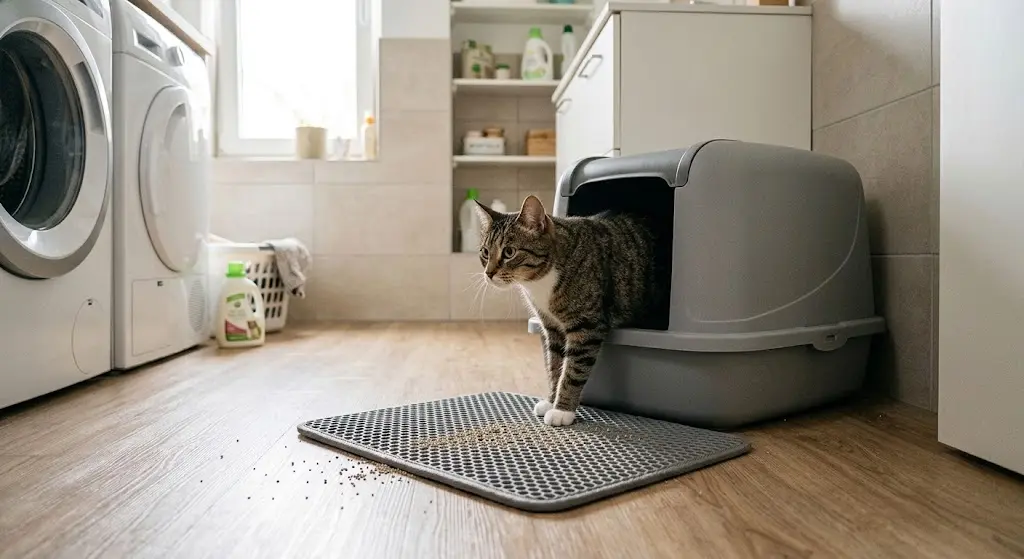
| Covered / Hooded Box | 60% – 75% Usable Space | Traps ammonia odors inside; limits vertical head clearance for tall cats. | Use only if hood is tall enough for the cat to stand completely upright without ears touching. |
| Automatic Self-Cleaning Globe | 40% – 55% Usable Space | Heavy machinery, motor housing, and waste drawers reduce internal globe room. | Verify globe interior volume (e.g., 65L+) and entrance width rather than total machine height. |
7 Clinical Signs Your Cat’s Litter Box Is Too Small
If your cat’s current litter box fails the 1.5× sizing rule, they will demonstrate clear physical and behavioral warnings:
- Perching on the Rim: Your cat balances their front or rear paws on the narrow plastic edge rather than standing on the litter bed.
- Rear Overhang Accidents: Urine or stool lands just outside the box entrance or back wall despite the cat stepping inside.
- Scratching the Outer Walls or Floor: Your cat aggressively scratches the plastic walls, hood ceiling, or surrounding floor rather than digging in the litter.
- Incomplete Waste Burial: Your cat eliminates and immediately sprints out of the box without attempting to cover their waste.
- Hunched / Compressed Posture: Your cat cannot extend their neck or keep their spine straight while squatting.
- Hesitation at the Entrance: Your cat approaches the box, inspects the opening, vocalizes, and walks away.
- Urinating Right Beside the Box: Depositing urine or feces 1 to 2 feet away from a clean, freshly scooped box is the classic indicator of physical sizing aversion.
Multi-Cat Household Sizing & Placement Geometry
In multi-cat homes, box size interacts directly with household territorial dynamics. The universal veterinary formula for box quantity is N + 1 (One litter box per cat, plus one extra).
However, placing three small litter boxes side-by-side in a laundry room counts as one single box location in feline psychology. A dominant cat can easily block the doorway, preventing timid cats from accessing the area. Distribute large XL boxes across different floors and separate quiet rooms to prevent territorial guarding.
Frequently Asked Questions About Litter Box Size
What size litter box does my cat need?
Your cat needs a litter box whose usable interior length is at least 1.5 times their nose-to-tail-base body length. For a typical 15-inch cat, the interior length should be at least 22.5 to 24 inches long, allowing full 360-degree turning space.
Can a cat litter box be too big?
No, an adult cat litter box cannot be too big. In feline behavior, bigger is always better. The only exception is entry wall height for kittens or severely arthritic senior cats who require a low front step (under 3.5 inches) to enter comfortably.
What size litter box does a Maine Coon need?
A Maine Coon requires an extra-large or jumbo litter box measuring at least 30 to 36 inches in interior length and 20+ inches in width. Because standard commercial boxes are often too small, many owners use 30 to 50-gallon clear plastic storage totes with an entry doorway cut into one side.
How high should the sides of a litter box be?
For average cats, 5 to 7-inch side walls are ideal. For high-peeing cats, male sprayers, or vigorous litter diggers, look for high-sided boxes with 8 to 12-inch back walls, keeping the front entry threshold lower at 3 to 5 inches.
Why is my cat peeing right outside the litter box?
Peeing right beside the box usually signals that the box is dirty, too small, cramped, or painful to step into (arthritic joints). However, always have a veterinarian rule out a urinary tract infection (UTI) or urinary crystals first before assuming it is purely environmental.
Are automatic self-cleaning litter boxes big enough for large cats?
Some models are, but check the interior globe dimensions rather than total machine height. Models like the Meowant SC10, CATLINK Open-X, and Neakasa M1 Plus offer open-top or 65L+ interior globes specifically designed for larger breeds up to 20+ lbs.
Editorial & Medical Disclosure: Happy Cat At Home is a reader-supported publication. When you purchase through links on our site, we may earn an affiliate commission at no additional cost to you. Content on this site is reviewed by licensed veterinarians for medical accuracy but does not replace individual veterinary examination, diagnosis, or treatment.