Home › Cat Calming › Calming Items for Cat Anxiety
Disclosure: Happy Cat At Home is reader-supported. Some product and online-vet links are affiliate links, so we may earn a commission at no extra cost to you. This guide doesn’t replace an exam by your veterinarian. How we make money.
10 Calming Items That Can Reduce Cat Anxiety (Vet Guide, 2026)

Last updated: · Checked against published feline studies listed in the sources below.
Reader discount
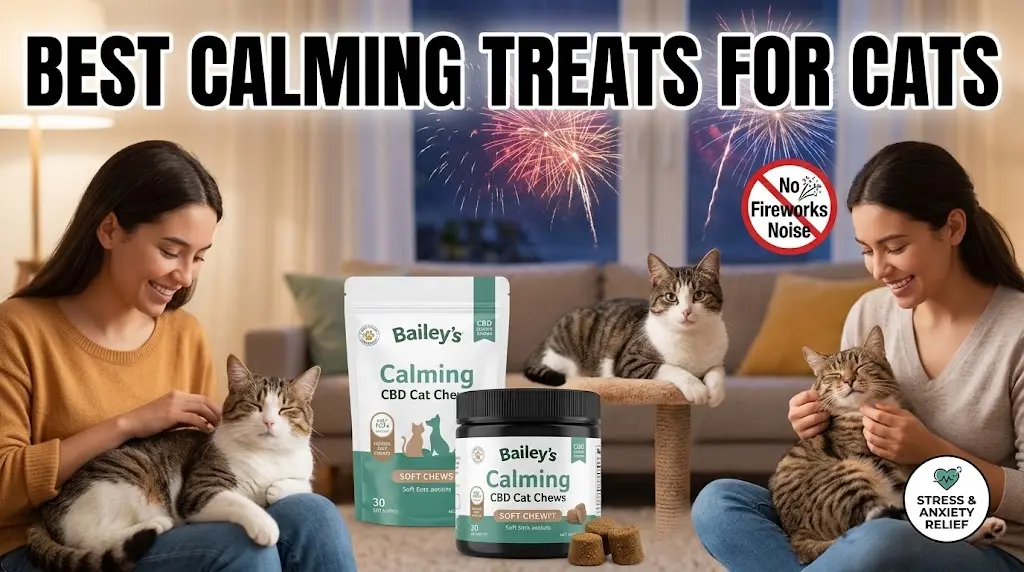
20% off Bailey’s CBD for cats with code HAPPYCAT
Valid through December 31, 2026. Enter the code at checkout on baileyscbd.com. Ask your vet before giving CBD, especially if your cat takes other medicines.
🌿 Calming Cat Chews → 💧 CBD Oil for Cats →Affiliate links: we may earn a commission at no extra cost to you.
What calming items can reduce cat anxiety?
The calming items most likely to help an anxious cat are a plug-in pheromone diffuser, a pheromone spray for the carrier, daily calming supplements or chews, and free home changes such as hiding spots, height, puzzle feeders and daily play. No single product works for every cat, so match the item to what’s stressing your cat.
- 🏠 Stress at home: pheromone diffuser
- 🐈 Cats not getting along: multi-cat diffuser + more perches
- 🚗 Vet visits and travel: pheromone spray + calming chew
- 🎆 Storms and fireworks: hiding spot in a quiet room + calming chew
- 🧩 Bored or restless: puzzle feeder + daily play
Which calming item is best for your cat?
Pick what’s stressing your cat to see the calming items we’d try first. It’s a starting point, not a diagnosis.
What is stressing your cat?
10 calming items for anxious cats
The first five items are products; the last five are home changes that cost little or nothing and help every anxious cat. Most cats do best with a combination.
1. Pheromone diffuser (best for stress at home)
A pheromone diffuser plugs into a wall outlet and releases a synthetic copy of the “familiar and safe” facial pheromone cats leave when they rub their cheeks on things. It’s the easiest first choice for moves, new pets, visitors, spraying and scratching, because nothing touches your cat.
Use it in the room where your cat spends most time, keep it plugged in continuously and replace the refill monthly. A 2024 controlled trial of a collar releasing the Feliway Optimum pheromone found less urine marking, scratching and cat-to-cat conflict over 28 days; read more in do cat calming collars work?
Feliway Optimum 30-Day Diffuser
The newest Feliway plug-in formula for general stress, spraying and scratching at home.
Feliway MultiCat Diffuser Kit
Designed for tension between cats that live together. Pair it with extra litter boxes, bowls and perches.
2. Pheromone spray (carriers, cars and vet visits)
A pheromone spray puts the same calming signal exactly where you need it, such as inside the carrier or on car bedding. Spray bedding about 15 minutes before your cat goes in so the alcohol carrier can evaporate, and never spray your cat directly.
Feliway Spray
A portable spray for carriers, car blankets and new furniture.
3. Daily calming supplements
Daily calming supplements contain ingredients such as alpha-casozepine (a milk protein), L-theanine or specific probiotic strains, and are meant for ongoing mild stress rather than emergencies. Small controlled studies support some of these ingredients in cats, but effects are usually modest, and they often take a few weeks to show.
Zylkene (alpha-casozepine)
Capsules you open over food, often used around moves, boarding or other changes. No sedation.
Purina Pro Plan Calming Care
A daily probiotic powder from Purina’s veterinary line, used to support calm behavior. Easy to sprinkle on food.
4. Calming chews for predictable events
Calming chews are treats you give before a known stressful event, such as a car ride, grooming or fireworks. Try one on a calm day first to check your cat will eat it and tolerates it.
VetriScience Composure Pro
A calming chew with colostrum, L-theanine and thiamine. The maker says it starts working in about 30 minutes; not every cat responds.
5. Cat-specific CBD (ask your vet first)
Some owners use cat-specific CBD oil or chews for stressful days, but CBD is not FDA-approved for cats and research in cats is limited. Choose a product made for cats with third-party lab testing, start low and talk to your vet, especially if your cat takes other medicines. See our CBD for cats guide.
Bailey’s CBD for Cats
Cat-specific CBD oil and calming chews.
6. Hiding spots and covered beds
A covered bed, cat cave or simple cardboard box gives a frightened cat a safe place to retreat, and hiding is one of the main ways cats cope with stress. In a 2014 study of 19 newly arrived shelter cats, cats given a hiding box had lower stress scores in the first days than cats without one. Never pull a cat out of a hiding spot.
7. Cat trees, shelves and window perches
Height lets an anxious cat watch the room without feeling cornered, which matters most in homes with dogs, children or several cats. Put perches in more than one room so a shy cat can move around without meeting a housemate head-on. See cat-friendly vertical space ideas and our best cat trees for large cats.
8. Puzzle feeders
Puzzle feeders make your cat work for food, which uses natural hunting behavior and gives a bored or restless cat something to focus on. Start with an easy puzzle so she doesn’t get frustrated, and count the food in her daily portion.
9. Wand toys and scratching posts
Daily play with a wand toy lets your cat stalk, chase and pounce, and finishing with a small meal helps her settle. Two short sessions a day often reduce night-time restlessness. Sturdy scratching posts near sleeping spots and doorways let her mark territory in an acceptable way. Our indoor exercise routine shows how.
10. An open carrier and familiar blankets
Leaving the carrier out all the time with soft, familiar bedding turns it into a normal resting place instead of a signal that a vet trip is coming. Use a blanket that smells of home for car rides and vet visits.
Calming items by stress trigger
Use this table to pick a main item and a support item for the situation your cat is facing.
| Stress trigger | Main item | Support | Give it |
|---|---|---|---|
| Moving or new home | Pheromone diffuser | Hiding box, familiar blanket | Start before the move; 2 to 4 weeks |
| Cats not getting along | Multi-cat diffuser | More perches, boxes and bowls | 2 to 4 weeks |
| Vet visit or car ride | Pheromone spray | Calming chew; ask your vet about medication | Spray 15 minutes before |
| Storms or fireworks | Quiet room with hiding spot | Calming chew given ahead of time | Before the noise starts |
| Night-time restlessness | Evening play + puzzle feeder | Daily calming supplement | 1 to 3 weeks |
| Sudden change in behavior | Vet check | Calming items after illness is ruled out | Now |
Calming products to avoid
Avoid essential oil sprays and diffusers, human calming or sleep medicines, and collars without a breakaway clasp.
When does cat anxiety need a vet?
See a vet if your cat’s anxiety starts suddenly, lasts more than two weeks or comes with physical signs, because pain and illness often look like anxiety in cats.
- Straining in the litter box: a cat, especially a male, who strains and passes little urine needs emergency care today.
- Not eating: a cat that stops eating for 24 hours needs a vet; cats can develop fatty liver disease. See why is my cat not eating?
- Over-grooming wounds: bald patches or sores from licking need a vet check for skin disease, allergies or pain.
- New aggression or confusion in an older cat: thyroid disease, high blood pressure and arthritis pain are common causes.
For severe anxiety, your vet may prescribe medication that calming products can’t replace. For a quick first opinion from home, a US online vet such as Dutch can help you decide how urgent it is (affiliate link).
Frequently asked questions
What can I give my cat to calm anxiety?
For everyday stress at home, a plug-in pheromone diffuser is the simplest first step. For short events like vet visits, use a pheromone spray in the carrier and ask your vet about a calming chew or medication. Sudden anxiety should be checked by a vet first.
What calms a cat down fast?
A quiet, dark room with a hiding spot calms most frightened cats fastest. Leave her alone, keep noise low and don’t pull her out. Pheromone spray on bedding and calming chews given ahead of time can help with predictable events.
Do calming items for cats actually work?
Some do for some cats. Pheromone products and a few supplements have small controlled studies behind them, but results vary a lot between cats. They work best combined with changes at home, such as hiding spots, height and play.
How long does a cat pheromone diffuser take to work?
Some owners notice a change within a few days, but give a diffuser at least 2 to 4 weeks of continuous use before you judge it. Keep it plugged in all the time in the room where your cat spends the most time.
Is CBD safe for anxious cats?
CBD is not FDA-approved for cats, and research in cats is limited. If you want to try it, choose a cat-specific product with lab testing, start low and talk to your vet first, especially if your cat takes other medicines.
Are essential oils safe for calming cats?
No. Cats process many essential oil compounds poorly, and oils such as tea tree, eucalyptus, citrus and peppermint can be toxic. Don’t diffuse them near cats or put them on your cat.
Can I give my cat human anxiety medicine?
No. Never give a cat human calming or sleep medicines unless your vet prescribes them with a dose for your cat. Some are dangerous to cats even in small amounts.
When should I see a vet about cat anxiety?
See a vet if anxiety starts suddenly, lasts more than two weeks, or comes with appetite loss, litter box straining, over-grooming wounds or aggression. Pain and illness often look like anxiety in cats.
- Endersby S, Billy C, De Jaeger X. Efficacy of a pheromone-impregnated collar in controlling feline problem behaviors. Frontiers in Veterinary Science, 2024 (Ceva-funded).
- Vinke CM, Godijn LM, van der Leij WJR. Will a hiding box provide stress reduction for shelter cats? Applied Animal Behaviour Science, 2014.
- Pet Poison Helpline, Essential oils and pets
Veterinary note: calming products support, but don’t replace, a vet exam. Sudden behavior changes in cats are often a sign of pain or illness.