How to Litter Train a Cat or Kitten: Step-by-Step Vet Guide & Retraining Fixes (2026)

Registered Veterinary Medical Practitioner, PVMC license no. 9472
Updated November 12, 2026 · Sources listed at the end
How do you litter train a cat?
Cats instinctively dig and bury waste, so litter training is mostly about giving them the right setup: a large, open, clean box with unscented litter in a quiet spot, and putting your cat in it at the right times.
- Start in one small, quiet room.
- Use a box about 1.5 times your cat’s length (a low box for kittens).
- Fill with about 2 inches of unscented litter (non-clumping for very young kittens).
- Place your cat in the box after waking, after meals and after play.
- Scoop daily, praise calmly, never punish, and clean accidents with an enzyme cleaner.
- 1. Why cats use litter naturally
- 2. How to litter train a kitten (step by step)
- 3. Litter training an adult, stray or rescue cat
- 4. The right setup: size, litter, number and place
- 5. Common litter training mistakes
- 6. Troubleshooting accidents
- 7. Moving to a self-cleaning box
- 8. When to see a vet and what to ask
- 9. FAQs
1. Why cats use litter naturally
Cats don’t need to be taught how to toilet; they need a place that feels right. Wild cats dig in loose soil or sand and bury their waste. When training fails, it’s usually the setup (box too small, scented litter, noisy spot) or a medical problem, not a lack of instinct.
2. How to litter train a kitten, step by step
Kittens usually start using litter at around 3 to 4 weeks old, as they begin to wean.
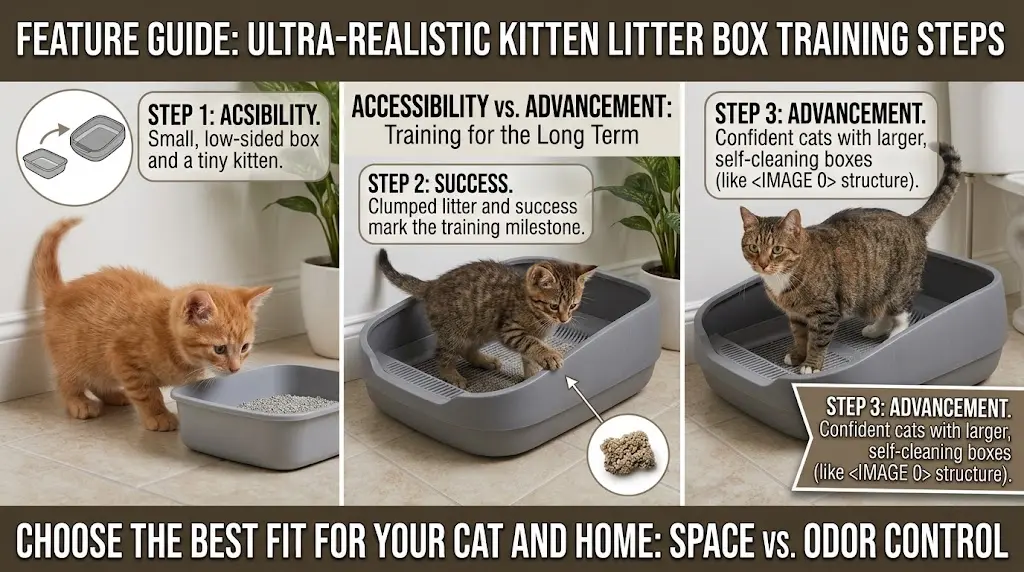
Step 1: Start in a small, safe room
A young kitten can’t hold on long or remember where the box is in a big house. Keep it in one kitten-proofed room with the box at the opposite side from its bed and food.
Step 2: Use a low box and kitten-safe litter
Use a box with a low side the kitten can step over. Very young kittens sometimes eat litter, so many vets suggest non-clumping, unscented litter such as paper pellets at first, switching to unscented clumping litter once the kitten stops tasting it.
Step 3: Place your kitten in the box at key times
- Right after waking up.
- About 15 to 20 minutes after meals.
- After active play.
- Whenever it sniffs the floor, circles, or crouches in a corner.
Step 4: Reward calmly, never punish
Let the kitten sniff and dig at its own pace. Praise softly when it goes. Never shout, spray water or rub its nose in accidents; fear teaches kittens to hide where they toilet.
Step 5: Give more space gradually
Once your kitten is reliable, open up more rooms one at a time and add a box in each main area. See how much to feed a kitten for meal timing.
3. Litter training an adult, stray or rescue cat
- Start in one quiet room with food, water, bed and box at different sides.
- For outdoor cats, start with soil: mix some clean, unfertilized potting soil into unscented litter, then reduce the soil over a week or two.
- Use a large, open box; adult strays may avoid covered boxes.
- Add calming support if your cat is very nervous. Some owners use pheromone diffusers; see calming items for cat anxiety.
- Be patient: give a new cat a week or two before judging.
4. The right setup: size, litter, number and place
Box size
Training goes faster when the box is big enough for your cat to turn around and dig comfortably. A good rule is a box at least 1.5 times your cat’s length from nose to tail base. Use our litter box size calculator to find the right size.
Litter type
Most cats accept fine, unscented clumping litter best. Strong scents can put cats off.
| Litter | Good for | Pros | Cons |
|---|---|---|---|
| Unscented clumping clay | Adults, older kittens | Fine texture cats like, easy to scoop | Can be dusty and heavy |
| Paper pellets (non-clumping) | Young kittens, after surgery | Low dust, safer if nibbled | Weaker odor control, change often |
| Tofu, corn, wheat or cassava | Eco-minded homes | Light, low dust | Cost; some cats dislike texture |
| Silica crystals | Odor control | Absorbent, light | Some cats dislike the feel |
Number of boxes
Use one box per cat plus one, in different areas. Boxes side by side count as one spot.
Location
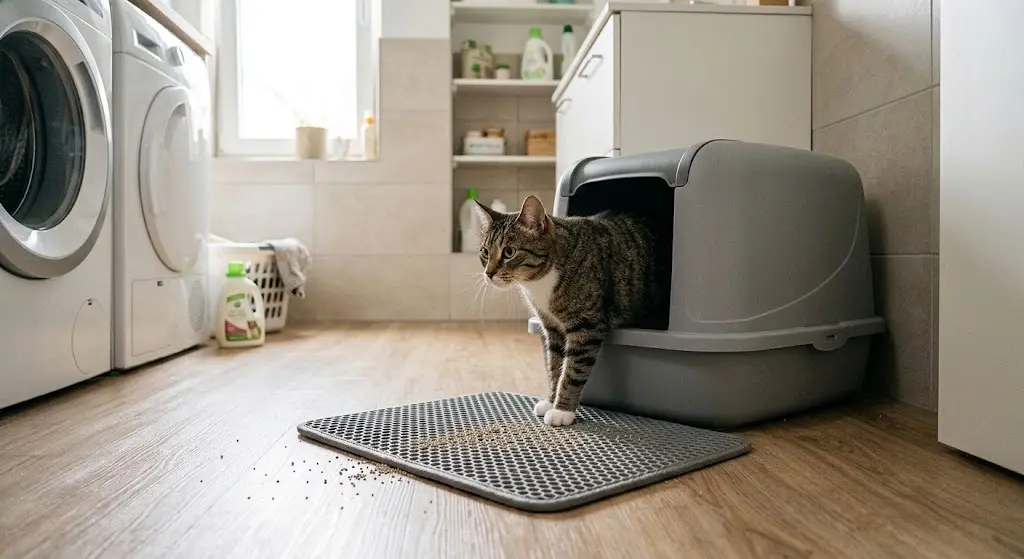
Quiet, easy to reach, with a way out, and away from food, water and loud appliances. See where to put a cat litter box.
Cleaning
Scoop at least daily. Wash the box with mild unscented soap and refill every 2 to 4 weeks for clumping litter. Avoid ammonia and strong-smelling cleaners.
Boxes that suit training
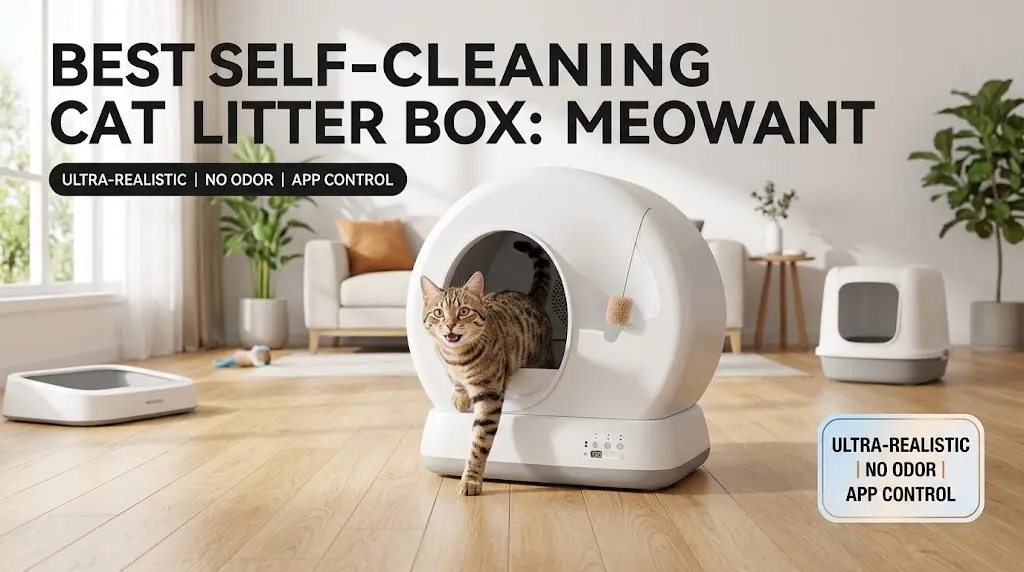
Meowant stainless steel box (LB02): a large manual box with high sides; steel doesn’t hold odor like scratched plastic. Oneisall Ease S1: a self-cleaning box with a step for adult and senior cats once they’re trained. CATLINK Scooper Open-X: an open-top self-cleaning box for larger adult cats.
See Meowant Steel Box → See Oneisall Ease S1 → See CATLINK Open-X →
Affiliate links. Check the maker’s minimum cat weight and age before using any automatic box.
5. Common litter training mistakes
- Box too small or too high for the cat’s size or age.
- Scented litter or a sudden litter change.
- Too much space too soon for a kitten or new cat.
- Box beside food or a noisy appliance.
- Not scooping often enough.
- Punishing accidents, which makes cats hide them.
- Cleaning accidents with ammonia instead of an enzyme cleaner.
- Starting with a self-cleaning box before the cat is reliable.
6. Troubleshooting accidents
Rule out medical causes first
Pain is a common reason for accidents in a cat that was trained. Bladder inflammation (cystitis), urinary infections, kidney disease, diabetes, constipation and arthritis can all play a part.
Multi-cat tension
One cat may block another from the box. Spread boxes across rooms and use open boxes so a timid cat isn’t trapped.
Clean accidents properly
Use an enzyme pet urine cleaner so the smell doesn’t draw your cat back to the same spot.
For more causes and fixes, see litter box issues with solutions.
7. Moving to a self-cleaning litter box
Introduce a self-cleaning box only after your cat uses a regular box reliably and meets the maker’s minimum weight and age.
- Place it beside the old box with the automatic cycle off.
- Use the same litter your cat already likes, if the box allows it.
- Turn on automatic cleaning once your cat uses it regularly.
- Remove the old box only when your cat is fully comfortable.
Compare models in our best self-cleaning cat litter boxes guide.
8. When to see a vet, and what to ask
- Now: straining with little or no urine, crying, blood in urine.
- Soon: diarrhea, constipation, accidents that continue despite a good setup, or a sudden change in a trained cat.
Questions to ask:
- Could pain or a urinary problem be causing accidents?
- Should we test urine or stool (for parasites in kittens)?
- Does my older cat have arthritis?
- Is this marking, and how can we reduce it?
9. Frequently asked questions
How long does it take to litter train a kitten?
Many kittens pick it up within days, because burying waste is instinctive. Some need a few weeks of a small space, a low box and regular placement after meals, naps and play before they are fully reliable.
At what age can kittens use a litter box?
Kittens usually start using a litter box at around 3 to 4 weeks old, when they begin to wean and can toilet without their mother’s help. Before that, the mother cat or a foster carer stimulates them to toilet.
How do I litter train an adult or stray cat?
Start in one quiet room with a large, open box and unscented litter. For a cat used to going outdoors, mix some clean soil into the litter at first, then reduce it over a week or two.
What litter is best for kittens?
Many vets suggest non-clumping, unscented litter such as paper pellets for very young kittens, which sometimes eat litter. Once your kitten stops tasting litter, usually by a few months old, unscented clumping litter is fine.
Why does my kitten keep pooping outside the litter box?
Common reasons are a box that is too far away, too high to climb into or not clean enough. Diarrhea, straining or parasites can also cause accidents, so see a vet if stools are abnormal.
Should a training litter box be covered or open?
An open box is usually easiest for training because your cat can see around it and get in and out easily. You can try a covered box later if your cat accepts it.
Why is my trained cat suddenly peeing on my bed or laundry?
A trained cat that suddenly pees on soft things may have bladder pain, such as cystitis, or be stressed. See your vet to rule out a medical problem before treating it as behavior.
Can I use a self-cleaning litter box for training?
Start with a regular box. Once your cat uses a box reliably and meets the maker’s minimum age and weight, you can introduce a self-cleaning box with its motor off at first, keeping the old box nearby.
- AAFP and ISFM: guidelines for diagnosing and solving house-soiling behavior in cats.
- Cornell Feline Health Center, Cornell University: litter box problems; caring for kittens.
- ASPCA: litter box training and problems.
Disclosure: Happy Cat At Home is reader-supported; some links are affiliate links and we may earn a commission at no extra cost to you. This guide is educational and does not replace a veterinary exam. How we make money.