17 Signs of a Happy Cat: Vet-Backed Body Language Every Indoor Cat Parent Should Know (2026)
Talk to an Online Cat Vet 24/7 →
Cats do not fake happiness. Unlike dogs, an indoor cat will not wag or grin to please you — a happy cat shows contentment through tiny, consistent signals most owners miss. This vet-backed guide walks through 17 science-based signs of a happy cat, what each one means, and the exact at-home tweaks (nutrition, hydration, enrichment, litter comfort) that move a stressed or bored indoor cat into a calm, purring, healthy one.
Why “Signs of a Happy Cat” Actually Matter
Feline wellness experts at Cornell note that up to 60% of behavioral issues in indoor cats — over-grooming, hiding, litter avoidance, night-time yowling — start as unmet emotional needs long before they look like a medical problem. Learning how to read a happy cat is the earliest, cheapest form of preventive care you can offer. Miss the signals, and small stress compounds into UTI flare-ups, obesity, or chronic anxiety.
The 17 Signs of a Happy Indoor Cat (Vet-Ranked)
1. Slow Blinks Directed at You
The famous “cat kiss.” A slow, deliberate blink is a cat’s way of saying I trust you enough to close my eyes near you. Return it slowly — most happy cats blink back within seconds.
2. Tail Held High With a Soft Curl at the Tip
A vertical tail with a little question-mark curl is the single clearest confidence signal in feline body language. Puffed, tucked, or thrashing tails mean the opposite.
3. Kneading (“Making Biscuits”) on You or a Blanket
A leftover kittenhood comfort reflex. Adult cats only knead when they feel completely safe. Bonus points if they purr and drool a little.
4. Relaxed, Loaf-Style Sitting Position
Paws tucked under, tail wrapped around the body, eyes half-closed. A loafing cat has decided nothing in the room is a threat.
5. Purring During Calm, Non-Painful Moments
Cats do purr when injured (self-soothing), but sustained purring during petting, sleep, or mealtime is contentment. If your cat suddenly stops purring during handling, note it — that is often the first sign of pain.
6. Head-Butting and Cheek Rubbing
Cats deposit friendly pheromones from glands on their cheeks and forehead. Bunting you = marking you as safe territory.
7. Belly Exposure (Look, Don’t Always Touch)
Exposing the belly is trust, not always an invitation to rub. A happy cat feels safe enough to leave the most vulnerable part of the body uncovered.
8. Consistent, Well-Formed Litter Box Use
A cat that reliably uses the box, covers waste, and does not linger or cry is a physically comfortable cat. Straining, frequent tiny trips, or avoidance = red flag for FLUTD or stress.
Make the box more inviting with a low-dust, low-odor setup: Try a Self-Cleaning Litter Box →
9. Healthy Appetite With a Steady Weight
Eating regularly, hydrating on their own, and staying within their ideal body condition score. A sudden appetite drop of more than 24 hours warrants a vet call.
Balanced nutrition is non-negotiable
A happy cat needs highly digestible, nutrient-dense food — many indoor cats are silently deficient in phytonutrients, omega-3s, and live enzymes that dry kibble strips away. The easiest at-home upgrade is a whole-food topper on their existing bowl:
Claim the Risk-Free Meow Greens Jumpstart →10. Drinking Plenty of Fresh Water Daily
Indoor cats are chronically under-hydrated, which quietly drives UTIs and kidney disease. A happy, healthy cat drinks throughout the day — and moving water almost always doubles intake.
Shop the Best Cat Water Fountain →11. Playful “Zoomies” and Hunting Play
Short bursts of chase, pounce, and stalking — especially at dawn and dusk — mean their prey drive is being satisfied. A bored cat replaces this with over-grooming or aggression.
12. Scratching Appropriate Surfaces (Not Your Couch)
Scratching is a happiness ritual: it stretches muscles, marks territory, and sheds nail sheaths. A cat with the right vertical + horizontal scratchers rarely destroys furniture.
See the Cat Scratch Board →13. Grooming Themselves Fully and Calmly
A shiny coat, groomed evenly from head to base of tail, is a strong wellness signal. Over-grooming bald patches, or refusing to groom, are opposite signals. Weekly brushing prevents hairballs and strengthens the human–cat bond.
Get the 5-Piece Cat Grooming Kit →14. Chirps, Trills, and Soft Meows Toward You
Chirping at birds outside the window, trilling as a greeting, or a short “prrrup” when you walk in are all happy-cat vocalizations. Long, low yowls or constant nighttime meowing are stress or medical signals.
15. Sleeping in Open, Exposed Spots
Happy cats nap in the middle of the hallway, on the sofa arm, or on your keyboard. Cats who only sleep hidden under beds or in closets are usually anxious or unwell.
16. Calm Body Language Around Household Changes
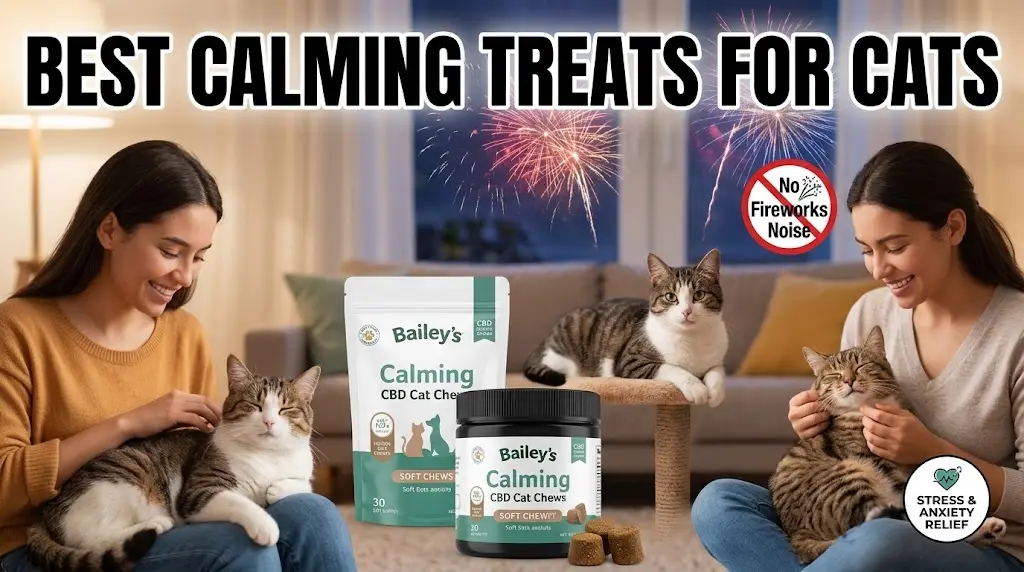
New furniture, visitors, a delivery — a well-adjusted cat investigates, sniffs, and moves on. Cats who bolt, freeze, or over-groom after minor changes benefit hugely from a vet-formulated calming aid.
Try Bailey’s Calming CBD Chews for Cats →17. Steady Digestion, Firm Stool, No Gas
Digestive comfort is a foundational — and criminally overlooked — happiness signal. A happy cat has firm stool, normal gas, and no vomiting between meals. A daily feline probiotic is the fastest at-home fix for mild GI upset:
See Vet-Prescribed Cat Probiotics →How to Turn a Stressed Indoor Cat Into a Happy One (At-Home Routine)
If your cat is only showing 5 or 6 of the 17 signs above, do not panic — indoor cat happiness is fixable in weeks, not years, when you address the four core pillars.
1. Nutrition — Feed for Digestion, Not Just Calories
Upgrade to a high-moisture, nutrient-dense meal plan. Add a whole-food topper for enzymes and phytonutrients most indoor cats lack.
2. Hydration — Make Water Irresistible
Replace still bowls with a filtered, circulating fountain. UTI and CKD rates in indoor cats drop noticeably when daily intake goes up.
3. Enrichment — Feed the Predator Brain
Two 10-minute wand-toy sessions per day, one puzzle feeder at breakfast, and vertical territory (cat trees, window perches) covers 80% of feline mental health needs. See our internal guide: Indoor Cat Enrichment Ideas.
4. Health Monitoring — Catch Problems Early
Weigh monthly, brush teeth twice weekly, and use a telehealth vet at the first behavior change. Related reads: CBD for Cats — Complete Vet Guide and Best Cat Dental Chews for Indoor Cats.
Vet-Picked At-Home Essentials for a Happy Indoor Cat
Meow Greens Jumpstart (Whole-Food Topper)
Human-grade greens, live enzymes, and phytonutrients that indoor cats rarely get from kibble alone. Risk-free jumpstart makes the switch painless.
Start the Vita-Smart Trial →Filtered Cat Water Fountain
Moving, filtered water can double a cat’s daily intake — the single biggest lever against UTIs and kidney disease.
Shop the Fountain →Self-Cleaning Litter Box
Odor-controlled, low-dust, and always fresh — the fastest way to eliminate box aversion and stress-based accidents.
See the Litter Box →Bailey’s Calming CBD Chews for Cats
Vet-formulated broad-spectrum hemp chews for anxious, senior, or newly-adopted cats. Zero THC, US-grown.
See Bailey’s CBD Oil for Cats →When a Behavior Change Is NOT Just Mood — Call a Vet
Book a same-day online vet visit if your cat shows any of these for more than 24 hours: refusing food, straining in the litter box, hiding non-stop, sudden aggression, limping, or a hard belly. These are medical signals, not personality changes.
Explore the Cat Anxiety Treatment Collection →Frequently Asked Questions
Is my indoor cat bored?
If your cat sleeps more than 18 hours, over-grooms, or wakes you nightly with yowls, boredom is likely. Add two short daily wand-play sessions and a puzzle feeder before assuming a medical issue.
How can I tell if my cat is truly happy or just tolerating me?
Look for the trio: slow blinks, tail-up greetings, and voluntary lap or shoulder contact. A tolerating cat allows petting but never seeks it out.
How do I keep an indoor cat happy in a small apartment?
Vertical space beats floor space. Add a tall cat tree, a window perch, and a scratcher near their favorite nap spot — you effectively triple the usable “cat map” of any room.
Do happy cats purr all the time?
No. Cats purr both when happy and when self-soothing pain. Context matters: a purr during petting and mealtime is contentment; a purr while hunched, refusing food, or hiding warrants a vet visit.
What is the fastest way to make an anxious cat happier?
Fix three levers in one week: add a water fountain, switch to a self-cleaning litter box, and try a vet-formulated calming aid. Most owners notice a visible shift within 7–10 days.
How often should I take a happy-looking cat to the vet?
Once a year for healthy adults, twice a year for seniors (11+). Use an online vet in between for behavior changes — early intervention is drastically cheaper and less stressful for the cat.
Sources: Cornell Feline Health Center — Feline Behavior Problems & Body Language; International Cat Care — Signs of Contentment; American Association of Feline Practitioners (AAFP) — Environmental Needs Guidelines.