HAPPY CAT AT HOME · FELINE GENETICS & BREED IDENTIFICATION
Is My Cat a Maine Coon Mix? Signs, Size & DNA Testing
Learn how to identify physical and behavioral traits of a Maine Coon mix, why physical appearance can be deceiving, and how at-home cat DNA testing confirms genuine ancestry and genetic health risks.
Transparency Disclosure
Affiliate Notice: Happy Cat At Home participates in select affiliate partner programs. When you click through our verified links to test kits, grooming tools, or smart pet products (marked rel=”sponsored noopener”), we may earn a small referral commission at no additional cost to you. This enables our veterinary review board to maintain our 100% independent, clinical testing standards. We evaluate every product independently regardless of brand sponsorships.
If you adopted a rescue cat with a majestic lion-like mane, tufted ears, and a bushy raccoon tail, you may be wondering if your maine coon mix inherited genuine gentle giant genetics. Shelter workers and rescue organizations frequently label any large, long-haired domestic cat as a “Maine Coon mix” based purely on coat length and size. However, because domestic longhair (DLH) cats independently evolved similar cold-weather physical traits through natural selection, visual inspection alone misidentifies up to 80% of mixed-breed felines. In this clinical guide, our veterinary review team breaks down the physical markers, behavioral clues, inherited health risks, and at-home genetic testing methods to help you determine if your cat is truly part Maine Coon.
How to Tell If Your Cat Is Part Maine Coon
- Large Frame & Bone Structure: Mixed-breed Maine Coons usually weigh 12 to 18 lbs (larger than average 8–10 lb domestic cats) and possess rectangular, muscular body frames.
- Lynx Ear Tips & Furnishings: Prominent tufts of fur growing from the tips and insides of the ears to protect against cold weather.
- Long Plumed Tail: A bushy, heavily furred tail that easily reaches from the base of the spine up to the shoulder blades.
- Shaggy Uneven Double Coat: Shorter fur around the shoulders that lengthens into a thick neck ruff, belly apron, and rear “breeches.”
- Dog-Like & Vocal Personality: Exceptional loyalty, chirping/trilling vocalizations instead of loud meows, and a fascination with running water.
Physical Signs of a Maine Coon Mix
Because purebred Maine Coons are one of the oldest natural breeds in North America, their physical characteristics reflect adaptations for surviving harsh New England winters. When a Maine Coon crosses with a domestic shorthair or longhair cat, the offspring typically inherit a subset of these distinctive physical traits.
Size and Weight (Males 13–18 lbs, Mixes Often Smaller)
While purebred male Maine Coons regularly weigh 15 to 25 pounds or more, a maine coon mix typically reaches 12 to 18 pounds for males and 10 to 14 pounds for females. Beyond weight, pay close attention to body length and growth rate. Maine Coons possess long, rectangular torsos rather than compact round frames. Furthermore, while standard cats stop growing by 12 months, Maine Coon mixes inherit a prolonged growth cycle, continuing to build bone density and muscle mass until 3 to 4 years of age.
Ear Tufts and Lynx Tips
One of the most noticeable features inherited from Maine Coon ancestors is ear furnishings. Look for two distinct types of ear hair: lynx tips (vertical tufts of fur extending from the very top point of the ear pinna) and ear furnishings (dense horizontal bushy hair growing inside the ear canal). These hair structures evolved to keep snow, ice, and wind out of the delicate ear canal.
Long, Bushy Tail
A Maine Coon mix almost always inherits a remarkably long, bushy tail covered in thick, flowing guard hairs. To test tail length, gently brush the tail forward along your cat’s back; in cats carrying significant Maine Coon genetics, the tip of the tail should easily reach or extend past the shoulder blades. In cold climates, cats wrap this thick tail around their nose and face for warmth during sleep.
Shaggy Coat and Mane/Ruff
Unlike breeds with uniform coat lengths (such as Persians or Angoras), a Maine Coon’s coat is shaggy, tactile, and intentionally uneven. The fur is shorter over the shoulders and gradually lengthens along the back, flanks, and belly. A prominent feature is the frill or neck ruff—a dense collar of fur around the neck that resembles a lion’s mane. The belly and hind legs also feature heavy “breeches” or “bloomers” that resist wet snow and mud.
Large Paws (Sometimes Polydactyl)
Maine Coons are famous for their giant, round paws that act like natural snowshoes on soft ground. Check between your cat’s toe pads: Maine Coon mixes display prominent clumps of fur (“snowshoe tufts”) sprouting between their toes. Additionally, the Maine Coon breed has a rich history of polydactyly (extra toes). While polydactyly was bred out of many show lines, up to 40% of historic Maine Coons possessed extra digits on their front or rear paws, a trait frequently passed to mixed offspring.
Personality Findings — Is Your Cat Acting Like a Maine Coon?
Physical appearance tells only half the story. The temperament of a maine coon mix is remarkably distinct from standard domestic cats, often earning them the nickname “the dogs of the cat world.”
Dog-Like Loyalty and Following You Around
Maine Coon mixes are famously people-oriented without being needy. Instead of demanding constant attention, a Maine Coon mix practices companionable shadowing—following you from room to room, sitting on your desk while you work, or lounging nearby. They are exceptionally welcoming to house guests, children, and other pets.
Chirping and Trilling Sounds
If your cat rarely utters a standard loud meow but constantly greets you with soft, melodious chirps, trills, and squeaks, you are listening to classic gentle giant communication. Maine Coons use high-pitched vocalizations to express excitement, announce their presence, or ask for dinner.
Love of Water
Inheriting a water-repellent double coat means Maine Coons lack the traditional feline fear of moisture. A maine coon mix will frequently pat their paws in their water bowl, play with toys in water, or inspect running faucets. Providing an elevated, circulating stainless steel water fountain like the Meowant Pet Water Fountain provides essential mental enrichment and encourages healthy hydration.
Why Looks Alone Aren’t Enough
It is a widespread misconception that any large, fluffy cat with ear tufts is part Maine Coon. In reality, random-bred Domestic Longhair cats represent over 95% of the long-haired cat population in North America. Through a process called convergent evolution, domestic cats living in colder northern climates naturally developed thick double coats, large paws, and ear furnishings over centuries without inheriting a single gene from a purebred Maine Coon ancestor.
A rescue cat can possess a massive frame, shaggy coat, and bushy tail while being 100% Domestic Longhair genetically. Conversely, a cat with a shorter coat or smaller stature might carry 25% to 50% Maine Coon DNA from a purebred grandparent. Visual observation can generate fun guesses, but an at-home cat dna test is the only scientifically validated tool to prove true lineage.
Best DNA Test to Confirm Maine Coon Ancestry
To accurately identify breed composition, genetic diversity, and health risk factors, geneticists analyze single nucleotide polymorphisms across your cat’s genome against reference breed databases.
Basepaws Cat DNA Test — Best Overall Breed & Health Kit ⭐
The Basepaws Breed + Health Cat DNA Test is the gold-standard genetic screening kit for cat parents seeking definitive answers about Maine Coon heritage. Utilizing an easy, non-invasive cheek swab, Basepaws compares your cat’s genomic sequence against a vast feline reference database encompassing 21+ breed groups, 43+ genetic health disease markers, and 25+ trait variations.
- Identifies Maine Coon genetic percentage breakdown across 21+ breed groups.
- Screens for major feline genetic diseases including HCM and Polycystic Kidney Disease (PKD).
- Includes lifetime report updates as Basepaws expands its feline genomic database.
- Requires only an easy 5-second cheek swab (no blood draw or vet trip needed).
- Provides a visual chromosome map illustrating exact genetic inheritance.
- Standard laboratory processing takes 4 to 6 weeks during peak testing seasons.
- Cheek swab must be kept clean from food debris for 30 minutes prior to sampling.
Confirm Your Cat’s Maine Coon Ancestry & Health Today
Unlock your cat’s full genetic report, breed percentages, and 43+ health condition risk markers with the #1 vet-recommended cat DNA kit.
🧬 Order Basepaws DNA Kit Direct →Health Risks Maine Coon Mixes Can Inherit
While mixed-breed cats benefit from heterosis (hybrid vigor)—which generally lowers the incidence of recessive genetic disorders compared to purebred lines—a maine coon mix carrying high Maine Coon DNA percentage can still inherit breed-specific health mutations.
Hypertrophic Cardiomyopathy (HCM)
Hypertrophic Cardiomyopathy (HCM) is the most common cardiac disease in cats, characterized by abnormal thickening of the heart muscle walls. In Maine Coons, HCM is strongly linked to a specific autosomal dominant mutation in the cardiac myosin-binding protein C gene. Cats carrying even one copy of this mutated gene are at elevated risk for heart failure, arterial blood clots, and sudden cardiac events. Screening via a cat dna test identifies gene carriers early, enabling yearly echocardiogram monitoring by a veterinary cardiologist.
Hip Dysplasia and Spinal Muscular Atrophy
Because of their giant bone structure, Maine Coons are one of the few feline breeds affected by hip dysplasia—a condition affecting the hip joint that causes stiffness and reduced jumping ability. Additionally, Maine Coons can carry genetic markers for muscle weakness. DNA screening confirms carrier status early.
Why Early Screening Matters
Detecting health risk factors early allows cat parents to adjust nutrition, support mobility, maintain ideal weight, and schedule routine veterinary checkups. For comprehensive care protocols on raising giant breeds, read our complete Maine Coon Care Guide for Beginners.
Caring for a Maine Coon Mix
Providing optimal daily care for a mixed-breed Maine Coon requires tailored nutrition, specialized grooming, and extra-large environmental enrichment tools designed for big-boned felines.
Feeding a Large Cat
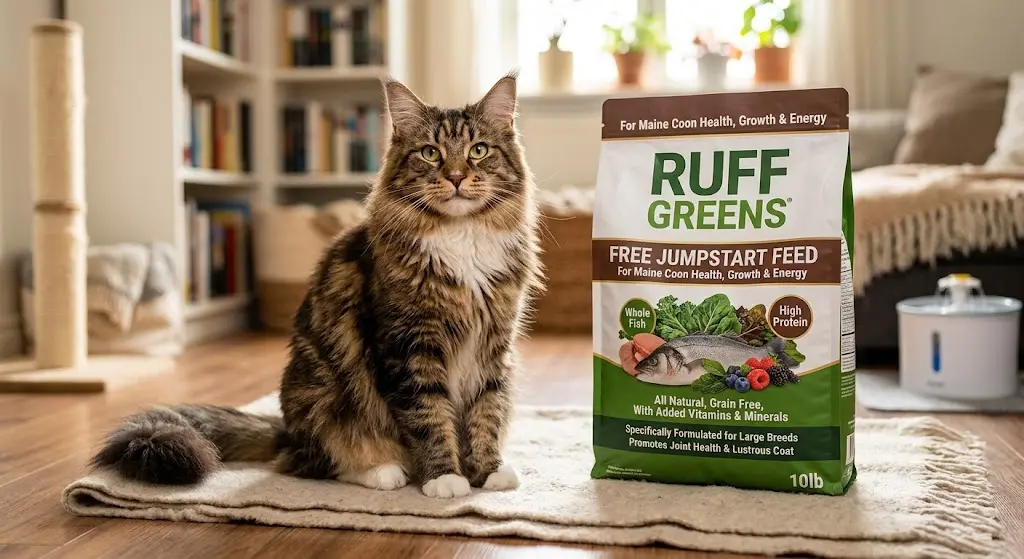
Because Maine Coons weigh 12 to 18+ pounds and remain active, their daily caloric requirements range from 300 to 450+ calories per day. Feed a high-protein, high-moisture diet rich in animal protein (chicken, turkey, salmon) to support lean muscle mass and protect kidney function. For complete caloric portion math, feeding schedules, and top vet-reviewed food formulas, consult our guide on Maine Coon Cat Food: How Much, What Type & Best Picks.
Grooming the Long Coat
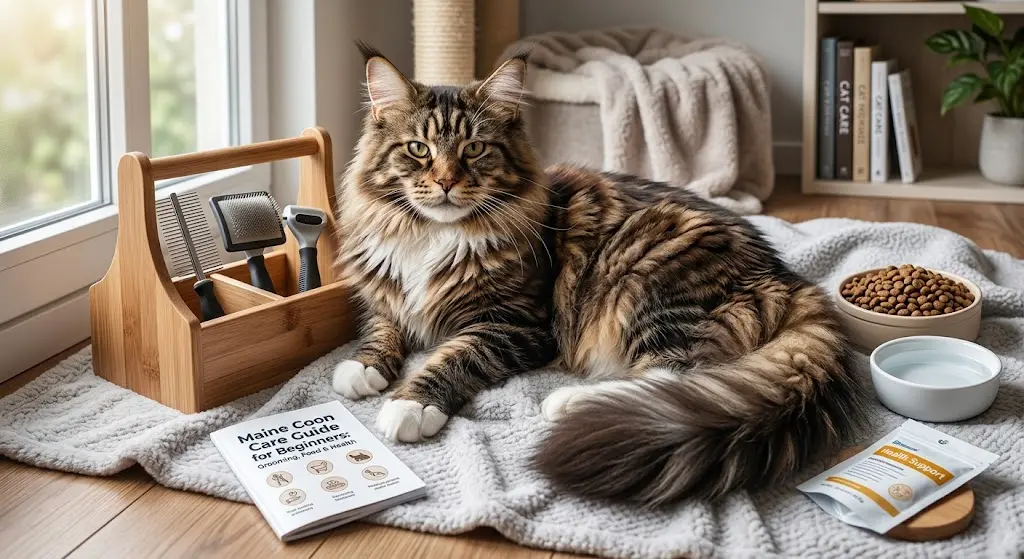
Although a Maine Coon mix usually has a less dense undercoat than a purebred, their shaggy double coat still requires grooming 2 to 3 times weekly to prevent mats behind the ears, armpits, and rear breeches. We recommend using a professional multi-tool grooming kit like The Cat Ladies Pet Grooming Kit, which includes a stainless steel slicker brush, dematting comb, and soft bristle brush to maintain coat shine and reduce hairballs.
Litter Box Size for Big Cats
Standard 18-inch litter boxes cause severe discomfort for giant cats, often leading to outside-the-box elimination accidents. A Maine Coon mix requires an extra-large box measuring at least 24 to 30 inches long (1.5 times the cat’s body length). For a hands-free, odor-controlled solution, the Meowant Automatic Self-Cleaning Litter Box features an open-top 65L spacious drum and low entrance ideal for large cats. Explore all top-rated options in our roundup of the Best Litter Boxes for Maine Coons.
When to See a Vet
While discovering your cat’s breed heritage is exciting, maintaining routine medical care is essential for long-term health. If your maine coon mix displays lethargy, rapid breathing, hind leg stiffness, sudden weight loss, or difficulty jumping, schedule an immediate examination with a licensed veterinarian. Medical Disclaimer: This guide is for informational purposes only and does not substitute for professional veterinary diagnosis or treatment. Always consult a licensed veterinarian regarding medical symptoms or health changes.
For non-emergency health questions or quick behavioral consultations from home, connect with a licensed US veterinarian 24/7 through Dutch Pet Online Telehealth Consultations
Frequently Asked Questions About Maine Coon Mixes
1. How can I tell if my cat is a Maine Coon mix?
You can identify a potential Maine Coon mix by checking for large physical proportions (12–18+ lbs), tufted lynx ears, a bushy tail as long as their body, a shaggy double coat with a neck ruff, tufted paws, and chirping vocalizations. However, an at-home genetic cheek swab like the Basepaws Cat DNA Test is the only definitive way to confirm Maine Coon ancestry percentage.
2. How big do Maine Coon mixes get?
Mixed-breed Maine Coons typically reach 12 to 18 pounds for males and 10 to 14 pounds for females—larger than standard 8–10 lb domestic cats, but slightly smaller than purebred Maine Coons (which weigh 15 to 25+ lbs). They also inherit a 3-to-4-year prolonged growth period.
3. Are Maine Coon mixes friendly?
Yes. Maine Coon mixes are famous for their sweet, social, and dog-like temperaments. They enjoy companionable shadowing, following family members around the home, greeting house guests, and getting along well with children and other pets.
4. Can a DNA test tell if my cat is part Maine Coon?
Yes. A high-quality cat DNA test like Basepaws compares your cat’s genomic sequence against reference breed databases to determine exact percentage breakdown across Western breed groups, including Maine Coon, Norwegian Forest Cat, and Siberian lines.
5. How much does a cat DNA test cost?
At-home cat DNA test kits typically cost between 9 and 59, depending on promotional discounts and kit tier (basic breed vs. full health and genome sequencing).
6. Do Maine Coon mixes have health problems?
Maine Coon mixes generally enjoy strong hybrid vigor, but they can inherit genetic risk factors for Hypertrophic Cardiomyopathy (HCM), hip dysplasia, and Polycystic Kidney Disease (PKD). Early genetic screening allows proactive veterinary care.
Final Verdict — Confirming Your Cat’s Gentle Giant Roots
If your rescue cat boasts a magnificent neck ruff, tufted snowshoe paws, a sweeping plumed tail, and a dog-like habit of following you from room to room, there is a strong possibility they carry gentle giant genetics. However, because domestic longhair cats independently evolved identical cold-weather adaptations, physical appearance alone cannot confirm mixed-breed heritage.
Ordering the Basepaws Cat DNA Test provides instant clarity—delivering a comprehensive percentage report of your cat’s Maine Coon ancestry alongside vital health risk screening for HCM and PKD. Confirming your cat’s genetic identity empowers you to provide tailored nutrition, proper litter box sizing, and proactive veterinary care for a long, happy life together.