HAPPY CAT AT HOME · FELINE BREED CARE & GIANT CAT WELLNESS
Maine Coon Care Guide for Beginners: Grooming, Food & Health (2026)
A comprehensive veterinary guide to raising a healthy, thriving Maine Coon—covering giant-breed growth timelines, coat combing, feeding schedules, HCM health screening, and XL home setups.
30-Second Summary for Cat Parents
Maine Coon care guide for beginners: Maine Coons are gentle giants that grow continuously for 3 to 5 years, reaching 12 to 25+ lbs. Proper care requires combing their dense water-resistant double coat 2 to 3 times weekly to prevent painful mats, feeding high-protein AAFCO growth diets rich in taurine and Omega-3s, and providing an extra-large litter box (at least 24 inches long). Screen for breed-specific genetic conditions—hypertrophic cardiomyopathy (HCM), hip dysplasia, and polycystic kidney disease (PKD)—via at-home DNA screening and annual veterinary exams. Keep your indoor environment enriched with heavy-duty climbing trees, wide whisker-friendly water fountains, and daily interactive hunting play.
Maine Coon Breed Characteristics & Slow Growth Timeline
Known as the “gentle giants” of the cat world, Maine Coons are native to New England and possess distinct physical traits built for rugged winters: a dense, water-repellent double coat, tufted paws (“snowshoes”), lynx-like ear tufts, and a long, bushy tail. Unlike domestic short-haired cats that reach adult size by 12 months, Maine Coons grow slowly for 3 to 5 years before reaching full physical and skeletal maturity.
| Age Milestone | Average Female Weight | Average Male Weight | Developmental Care Focus |
|---|---|---|---|
| 3 Months | 3.5 – 5.0 lbs | 4.5 – 6.5 lbs | Kitten growth formula; high-protein, calorie-dense nutrition; initial socialization. |
| 6 Months | 6.5 – 9.0 lbs | 8.5 – 12.0 lbs | Comb habituation; spay/neuter review with vet; intro to XL scratchers. |
| 12 Months (1 Year) | 9.0 – 12.0 lbs | 12.0 – 16.0 lbs | Transition from kitten to young adult food; baseline HCM genetic test. |
| 2 Years | 10.5 – 14.0 lbs | 14.0 – 19.0 lbs | Full coat density emerges; joint support (Omega-3 EPA/DHA) introduced. |
| 3 – 5 Years (Adult) | 11.0 – 16.0 lbs | 15.0 – 25.0+ lbs | Full skeletal & muscle maturity; annual COHAT dental & cardiac monitoring. |
Beginner’s Home Setup & Shopping Checklist for Giant Cats
Standard cat accessories designed for 8-lb domestic cats will not hold up to an adult Maine Coon. Buying undersized equipment is the most common mistake beginners make, leading to broken cat trees, litter box aversion, and furniture damage.
Essential Equipment Checklist for Maine Coons:
- Heavy-Duty Cat Tree (60+ Inches Tall): Look for solid wood construction, wide posts (5+ inches in diameter), and extra-large perches capable of supporting 25–30 lbs without tipping.
- Extra-Large Scratching Posts: A scratching post must be at least 32 to 36 inches tall to allow a full-length stretch. Thick natural sisal rope is ideal.
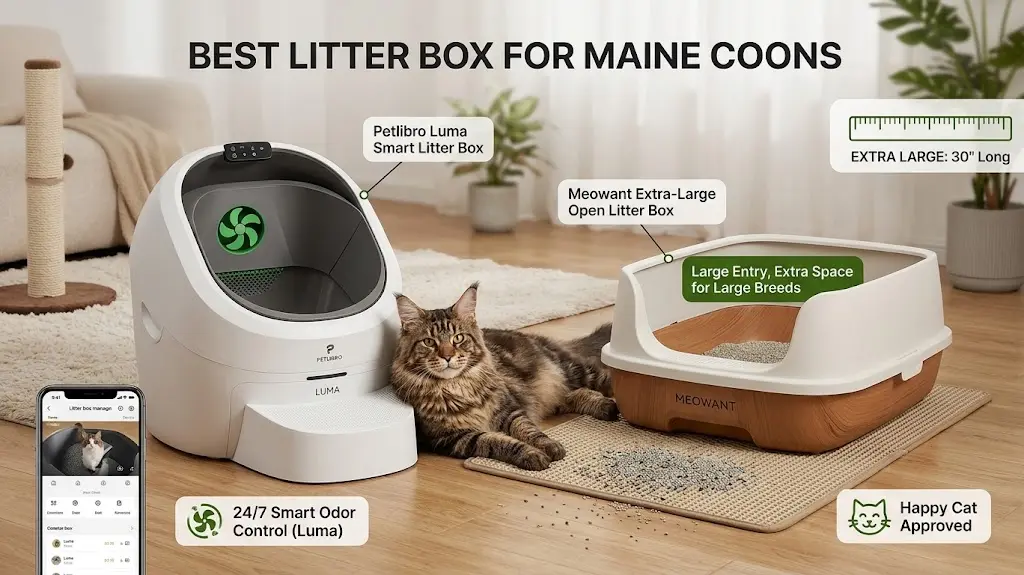
- Extra-Large (XL) Litter Box: The box must be at least 1.5 times the length of the cat from nose to tail (minimum 24″ x 18″ usable floor space). Explore top setups in our review of the best cat litter box brands.
- Wide Whisker-Friendly Bowls or Fountains: Maine Coons have wide muzzles and sensitive whiskers. Stainless steel or ceramic bowls with broad, shallow edges prevent whisker fatigue.
- Sturdy Travel Carrier: A soft-sided or hard-shell carrier rated for dogs up to 30 lbs, with top and side zipper loading for stress-free transport.
Need Virtual Vet Guidance for Your New Kitten?
Have questions about kitten vaccines, growth tracking, or carrier habituation? Connect with a licensed US veterinarian online from home.
💬 Consult a Vet Online (24/7) → Paid affiliate link · Connect with a licensed US vet in under 15 minutes.Maine Coon Grooming: Combing, Shedding Control & Bathing Rules
The Maine Coon coat consists of a silky outer guard coat and a soft, insulating undercoat. While relatively low-matted compared to Persians, their fur will tangle behind the ears, under the armpits, along the stomach, and around the “breeches” (hind legs) if neglected.
| Grooming Step | Recommended Tool | Frequency | Veterinary Technique |
|---|---|---|---|
| Undercoat Combing | Stainless Steel Greyhound Comb (Wide/Fine Pins) | 2 – 3 Times Weekly | Part the fur to the skin; gently comb outward from roots. Never yank mats. |
| Deshedding & Surface Coat | Gentle Slicker Brush or Undercoat Rake | Weekly (Daily in Spring) | Light strokes along back and flanks to catch loose hair before ingestion. |
| Nail Trimming | Heavy-Duty Pet Nail Clipper with Safety Guard | Every 2 – 3 Weeks | Clip only the translucent tip; avoid the pink vascular quick inside the nail. |
| Bathing | Hypoallergenic Feline Shampoo | Every 2 – 3 Months (Optional) | Breathe lukewarm water into coat. Towel dry thoroughly in a warm draft-free room. |
For cats that show anxiety or vocalize during grooming sessions, pair grooming with calming rewards. Read our detailed review on Best Calming Treats for Cats.
Feeding & Nutrition Guidelines: Kitten to Senior
Because Maine Coons build extensive bone mass and dense muscle tissue, their dietary protein requirements are higher than average domestic cats. They require complete, AAFCO-compliant formulations rich in animal-derived proteins, essential taurine, and anti-inflammatory fatty acids.
1. Kitten Growth Nutrition (0 to 18 Months)
Maine Coon kittens require calorie-dense, high-protein kitten food formulated for growth. Feed 3 to 4 small meals daily until 6 months of age, then transition to 2 or 3 meals daily. Do not rush them off kitten food—their rapid bone development demands higher calcium, phosphorus, and DHA levels than adult diets provide.
2. Adult Maintenance Nutrition (1.5 to 7 Years)
Adult Maine Coons thrive on a blend of high-moisture wet food and measured dry kibble. Wet canned food delivers 70–80% moisture, protecting the feline lower urinary tract (FLUTD) and kidneys from chronic dehydration. Learn about whole-food nutrition in our guide on Best Human-Grade Cat Food in the USA.
3. Essential Fatty Acids & Joint Support
Because adult Maine Coons carry 15 to 25 lbs on their joints, adding high-dose EPA and DHA Omega-3 fish oil supports joint cartilage, reduces skin dandruff, and maintains coat shine. For a complete overview of meal planning and supplements, visit our Cat Food & Pet Nutrition Hub.
Boost Nutrition & Hydration Daily
Pair high-protein wet food with a circulating water fountain to double voluntary hydration and protect kidney health.
💧 Explore Meowant Stainless Water Fountains → Paid affiliate link · Ultra-quiet circulating filtration for indoor cats.Choosing the Right XL Litter Box for Maine Coons
Litter box avoidance is the #1 reason owners surrender large cats. Standard plastic boxes measure 18″ x 14″, forcing a 22-inch Maine Coon to cram its body inside, scrape against dirty walls, or hang its tail over the edge.
Always maintain the N+1 Rule for litter boxes: provide 1 litter box per cat in the home, plus 1 extra box. Place boxes in quiet, low-traffic areas away from feeding bowls and noisy appliances.
Exercise, Play & Indoor Enrichment
Despite their massive size, Maine Coons remain playful and kitten-like throughout adulthood. Without structured physical outlets, bored Maine Coons can develop destructive scratching, night yowling, or behavioral aggression.
Top Indoor Enrichment Strategies for Maine Coons:
- Interactive Hunting Games: Use wand feather toys for 10–15 minutes twice daily. Follow the natural feline predatory sequence: Stalk → Chase → Pounce → Catch → Feed.
- Water Play Stations: Maine Coons love water! Provide a shallow plastic tray with floating cat toys or ice cubes, or install a circulating water fountain to satisfy their splashing instinct. Learn hydration hacks in our guide on Cat Not Drinking Water: The 24-Hour Fix.
- Vertical Climbing Highways: Install sturdy wall-mounted cat shelves, window perches, and tall scratching posts. Read more creative ideas in 27 Indoor Cat Enrichment Ideas.
Breed Health Concerns & Screening (HCM, Hip Dysplasia, PKD)
While generally hardy, Maine Coons have well-documented genetic predispositions to specific orthopedic and cardiac conditions. Responsible pet ownership requires understanding these risks and executing early screening.
| Health Condition | Clinical Symptoms | Genetic Marker / Diagnostic Tool | Veterinary Action Plan |
|---|---|---|---|
| Hypertrophic Cardiomyopathy (HCM) | Lethargy, rapid shallow breathing, exercise intolerance, sudden collapse. | MYBPC3 gene mutation DNA test + Annual Cardiac Echocardiogram. | Early beta-blockers, ACE inhibitors, low-sodium diet, regular vet monitoring. |
| Hip Dysplasia | Reluctance to jump, stiff gait, bunny-hopping, irritability when petted on hips. | OFA / PennHIP Pelvic Radiographs under sedation. | Weight management, glucosamine/chondroitin, Omega-3 EPA/DHA, joint care. |
| Polycystic Kidney Disease (PKD) | Increased thirst, frequent urination, weight loss, vomiting, bad breath. | PKD1 gene DNA swab test + Renal Ultrasound. | Subcutaneous fluids, renal therapeutic diet, circulating water fountains. |
| Spinal Muscular Atrophy (SMA) | Unstable gait, muscle weakness in hindquarters, swaying hips in kittens. | SMA gene swab test (Basepaws DNA Test). | Supportive care, padded indoor living environment, non-slip rugs. |
| Feline Dental Disease / FORL | Bad breath, drooling, dropping kibble, red inflamed gum margins. | Basepaws Oral Health DNA Test + Annual COHAT Vet Exam. | Daily brushing, enzymatic water additives, professional extractions if needed. Read 12 Signs of Dental Disease in Cats. |
Screen Your Maine Coon for 43+ Genetic Diseases at Home
Get a complete DNA report covering HCM, PKD, SMA, and breed ancestry from a single cheek swab.
🧬 Order Basepaws Breed + Health DNA Test → Paid affiliate link · Screen for 43+ hereditary conditions with 1 simple cheek swab.US Cost Analysis of Raising a Maine Coon (2026 Budget)
Raising a Maine Coon in the United States incurs higher recurring costs than a standard domestic cat due to food volume, XL equipment, and specialized health screening.
| Expense Category | First-Year Initial Cost (USD) | Annual Recurring Cost (USD) | Money-Saving Tip |
|---|---|---|---|
| Kitten / Adoption Fee | $1,200 – $3,000 | $0 | Adopt from a verified breed rescue or ethical TICA/CFA breeder with health guarantees. |
| Initial Setup & Equipment | $400 – $800 | $50 – $100 | Buy heavy-duty XL cat trees and scratchers once rather than cheap replacements. |
| Premium Food & Nutrition | $600 – $1,000 | $700 – $1,200 | Buy high-protein canned food in bulk (12.5 oz cans) to save 20–30% per ounce. |
| Litter & Supplies | $150 – $250 | $200 – $350 | Use high-clumping unscented litter in XL low-tracking boxes. |
| Veterinary Care & Vaccines | $350 – $600 | $250 – $500 | Enroll in pet health insurance early before pre-existing conditions are documented. |
| DNA & Cardiac Health Testing | $120 – $300 | $150 – $350 | Run at-home DNA screening early using our Best Cat DNA Test Guide. |
| Total Budget Estimate | $2,820 – $5,950 | $1,350 – $2,500 | Plan emergency savings of $1,000+ for unexpected medical events. |
Daily & Weekly Care Schedule for Beginners
| Timeframe | Task Item | Action Steps |
|---|---|---|
| Daily | Feeding & Hydration | Serve measured meals; refresh water fountain; wash bowls with warm water. |
| Daily | Litter Box Maintenance | Scoop waste twice daily; top up clean unscented litter. |
| Daily | Play & Attention | Provide 2 x 15-minute interactive hunting play sessions. |
| Weekly (2-3x) | Coat Combing | Comb undercoat behind ears, armpits, and belly with stainless steel comb. |
| Weekly | Health & Safety Check | Inspect ears, eyes, paws, and coat for mats, parasites, or redness. |
| Monthly | Nail Trimming | Clip sharp tips of front claws; inspect paw pads. |
| Monthly | Full Box Scrub | Emply litter, wash box with mild soap, refill fresh substrate. |
| Annually | Veterinary Wellness | Wellness exam, vaccines, cardiac check, and dental evaluation. |
Frequently Asked Questions About Maine Coon Care
Are Maine Coons good for first-time cat owners?
Yes. Maine Coons are affectionate, gentle, adaptable, and get along well with children and dogs. However, first-time owners must be committed to regular coat combing twice weekly, feeding higher food volumes, providing XL litter boxes, and scheduling annual vet health checks.
How often should you brush a Maine Coon cat?
Comb your Maine Coon’s coat 2 to 3 times per week using a stainless steel Greyhound comb. During spring and fall shedding seasons, daily combing is recommended to prevent painful mats and reduce hairballs.
What is the best litter box for a Maine Coon?
An extra-large (XL) open-top litter box measuring at least 24 inches long by 19 inches wide is ideal for an adult Maine Coon. Standard litter boxes are too small and often cause litter box avoidance.
Do Maine Coons get along with dogs and other cats?
Yes. Maine Coons are famously dog-friendly and thrive in multi-pet homes. If introducing a new cat or managing housemate tension, follow our step-by-step guide on How to Stop Cat Aggression Toward Other Cats.
How big do Maine Coons actually get?
Adult female Maine Coons typically weigh 11 to 16 lbs, while adult males weigh 15 to 25+ lbs. They can measure 38 to 40 inches in body length from nose to tail tip.
What health problems are Maine Coons prone to?
Maine Coons are predisposed to hypertrophic cardiomyopathy (HCM heart disease), hip dysplasia, polycystic kidney disease (PKD), and spinal muscular atrophy (SMA). Genetic testing and annual vet exams are essential for early detection.