How to Make Solo Play Safer for Cats When You’re Away from Home
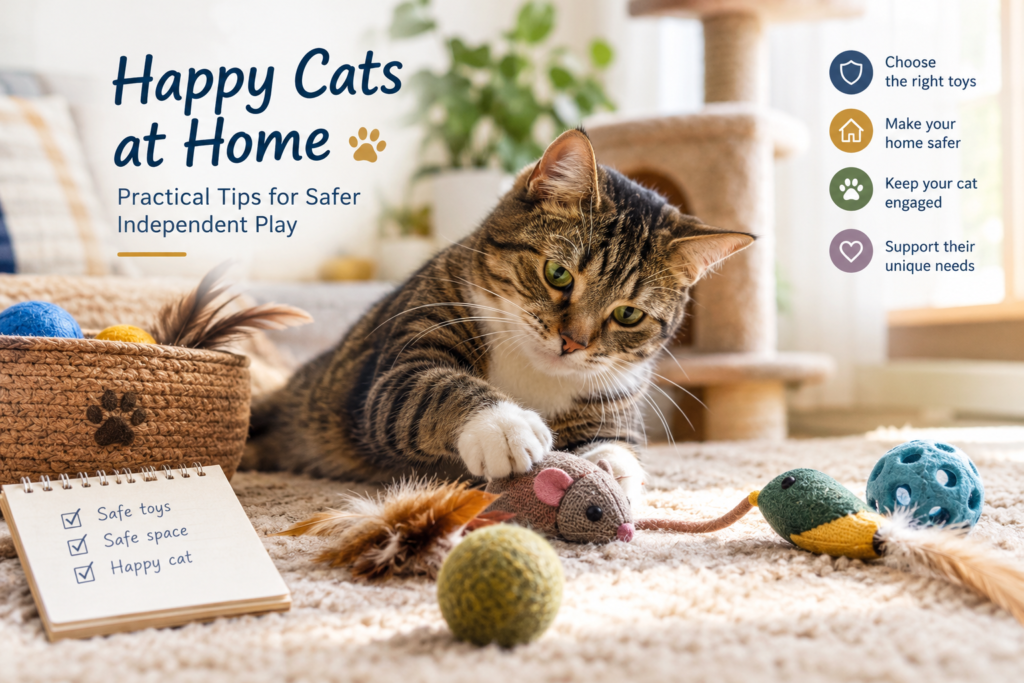
Leaving a cat home alone often means deciding which toys to leave within reach and which ones to put away until you return. That choice matters more than the number of toys scattered around the room. A cat might spend ten minutes chewing the tail off a fabric mouse, for example, then return to it later and pull out the stuffing. Another might ignore a ball for hours before suddenly chasing it across the floor.
When choosing cat toys, think about what your cat actually does with them. Does it bat objects around, chew through fabric, or pull at anything that dangles? These habits help determine which safe cat toys for unsupervised play belong in the home while you’re away.
Some toys are better saved for time together. Wand toys with long strings, for instance, need supervision because a cat can become entangled in the cord or swallow part of it. Other toys may be suitable for independent play, provided they are well made, intact and appropriate for that particular cat. A quick check before you leave can help you make that distinction.
What Makes a Cat Toy Suitable for Independent Play?
A toy’s suitability for independent play depends on its construction and how your cat uses it. A soft mouse might work well for a cat that bats it around the floor, while the same toy could become a hazard for a persistent chewer that pulls at its seams. Choose toys based on your cat’s actual play behaviour, rather than appearance alone.
Construction and durability:Examine seams, joints, fasteners, and attachment points. Confirm the components are secure during normal play, with no loose threads, splitting seams, or exposed internal materials.
Size and shape: Choose toys large enough to reduce the risk of swallowing, while remaining easy for your cat to carry, bat or chase. Small decorative pieces, loose bells and detachable plastic parts deserve particular attention.
Your cat’s behaviour: A toy that works for a gentle paw-batter may be inappropriate for a persistent chewer. If your cat regularly pulls toys apart, chews fabric or removes small decorations, choose simpler designs and inspect them frequently.
Cornell Feline Health Center recommends choosing toys carefully and checking for small or detachable parts that could be ingested. A practical rule is to match the toy to your cat’s habits and inspect it regularly as it wears.
Cat Toys to Put Away Before Leaving Home
Some toys work well during a play session but are better stored away when your cat is alone. The main concerns are entanglement, swallowed parts and damage that exposes small pieces or filling.
Wand Toys, Fishing Rods and Long Cords
Wand toys and fishing-rod toys use strings, ribbons or elastic cords to imitate prey. These are useful for interactive play, but a cat left alone with a dangling cord can become tangled or swallow part of it. Put the toy away after your play session, including the handle and loose attachments.
VCA Animal Hospitals recommends supervising cats with these toys because string ingestion can cause serious intestinal injuries.
Toys with Detachable Parts
Check toys with feathers, bells, plastic eyes, glued decorations or small accessories and choose toys with securely fitted components. Also remove damaged items from your cat’s play area.
Worn, Fraying or Damaged Toys
A toy’s condition can change after weeks of chewing and chasing. Look for split seams, loose threads, exposed stuffing, cracked plastic and pieces that have begun to separate.
Inspect favourite toys regularly and retire them when their construction begins to break down. A toy that was suitable when new may need replacing as it wears.
Knitted Toys and Yarn-Based Items
Knitted toys, yarn, wool and loose thread require particular care, especially with cats that chew or swallow fibres. Threads can become caught around the tongue or travel into the digestive tract, where they may cause serious injury.
Keep balls of yarn, loose wool and sewing materials stored away. For knitted toys, examine the stitching and any attached features, and reserve items that unravel easily for supervised play—or replace them with a more durable option.
The key difference is the type of risk: long cords can cause entanglement or internal injury if swallowed, detachable parts can become choking or ingestion hazards, and damaged materials can expose filling or loose fibres. Before leaving home, put these items away and leave out toys suited to your cat’s individual chewing and play habits.
How to Inspect Cat Toys for Safety
A quick inspection can help you catch damage before your cat pulls a toy apart or swallows a loose component. Pay particular attention to toys your cat chews regularly, since wear can develop around seams and attachments long before the toy looks badly damaged.
| Inspection point | What to check |
|---|---|
| Seams and stitching | Splits, loose threads, exposed stuffing or widening gaps |
| Attachments | Loose feathers, bells, eyes, clips, glued joints or fasteners |
| Surface and materials | Cracks, fraying, peeling, exposed foam or pieces breaking away |
| Size and shape | Detached pieces small enough to swallow, sharp edges or damaged openings |
| Moving components | Loose wheels, accessible batteries, exposed wiring or parts that jam |
| Cleanliness and condition | Persistent dirt, moisture, unusual odours or deterioration that affects the material |
Run your fingers over the toy’s surface to identify rough edges and weakened sections. Gently check its attachments for movement and examine both sides of fabric toys, including areas around knots and seams.
For electronic toys, inspect the battery compartment, casing and wiring. Follow the manufacturer’s guidelines on cleaning and maintenance, and remove damaged or malfunctioning items from use.
Replace a toy when its safety depends on a repair that may fail during play. Removing a loose component alone may leave an opening, exposed material, or weakened structure that still presents a hazard.
Choose suitable toys and check play items for damage. A regular inspection routine helps owners spot wear before it becomes a more serious problem.
Prepare Your Home for Safer Independent Play
A well-made toy can become hazardous if the surrounding space creates risks. Before leaving, check where your cat will play and remove objects that could turn an ordinary chase into an accident.
Before leaving:
- Secure household cords: Keep electrical cables, blind cords and dangling wires out of reach where possible. Cats may chew or become entangled in accessible cords.
- Put away small objects: Hair ties, rubber bands, sewing thread, needles, plastic packaging and other small items can attract curious cats and may be swallowed.
- Check furniture and hiding places: Look for unstable objects, sharp edges, narrow gaps and openings where a cat could become trapped.
- Inspect the play area: Make sure toys move freely and that shelves, furniture and other surfaces remain stable during jumping and chasing.
- Keep supervised-play equipment stored: Put away wand toys, long strings and interactive lures after each session.
- Provide a comfortable environment: Ensure your cat can reach fresh water, a clean litter tray, comfortable resting places, and familiar areas for climbing or observing its surroundings.
The aim is to make independent play easier to manage by checking both the toys and the space around them.
Keeping Cats Engaged While You’re Away
Safety and enrichment work together. A cat needs suitable activities, but filling a room with toys is less useful than selecting a few appropriate options and keeping them interesting.
Rotate suitable toys
Keep a selection of appropriate toys and rotate them periodically to maintain interest. Store the unused items and inspect them before returning them to circulation.
Rotation also gives you room to check for wear. A toy that has spent several days in storage may still have loose attachments or weakened seams from its previous use.
Introduce food puzzles gradually
Food-dispensing toys can encourage problem-solving and make part of a cat’s daily feeding routine more engaging. Start with a simple design and observe how your cat uses it. Confirm the toy remains intact and that the cat can access the food comfortably.
Follow the manufacturer’s instructions for cleaning, food suitability and maintenance. A puzzle that is too difficult may frustrate a cat, while a poorly maintained one may collect food residue.
Make room for exploration
Cats benefit from opportunities to climb, observe, hide and investigate. A stable cat tree, a secure resting perch and suitable hiding places can add variety to the home environment.
Cardboard boxes and simple rolling toys can also provide inexpensive enrichment when their size, condition and design suit the individual cat. Check boxes for staples, sharp edges, loose tape and handles that could catch a paw or head.
These activities complement toy-based play and give cats several ways to engage with their surroundings throughout the day.
Special Considerations for Different Cats
A toy’s suitability can change depending on a cat’s age, physical abilities and behaviour.
Kittens: Young cats explore through play and mouthing, so carefully choose the toys and regularly inspect them for damage. Choose appropriately sized toys with secure components, and assess unfamiliar items during supervised sessions before considering them for independent use.
Persistent chewers: Cats that bite through fabric, rubber or plastic require a more cautious approach. Examine toys after use and choose designs suited to their chewing behaviour.
Cats that swallow non-food items: Some cats repeatedly ingest string, fabric, plastic or other materials. These behaviours warrant veterinary advice. Keep tempting materials out of sight and choose activities depending on your veterinarian’s recommendations.
Older cats and cats with limited mobility: Consider toys that encourage gentle batting, sniffing or food exploration. Keep play areas accessible, avoid unstable climbing opportunities and choose activities that suit the cat’s movement and energy levels.
For every cat, use observed behaviour as key to the selection process. A toy’s label or intended purpose offers a starting point; the cat’s actual interaction with it helps determine whether it belongs in the independent-play environment.
What to Do If Your Cat Swallows Part of a Toy
If you suspect your cat has swallowed string, thread, stuffing, plastic or another toy component, contact your veterinarian promptly for advice. Some foreign objects pass through the digestive tract, while others can cause an obstruction or internal injury. String and other long, thin materials are particularly dangerous because they can become anchored and damage the intestines.
Watch for vomiting, reduced appetite, unusual tiredness, abdominal discomfort or difficulty passing stool. These signs warrant urgent veterinary attention, although symptoms may take time to appear.
If string or thread is hanging from your cat’s mouth or anus, never pull it. Pulling can injure the digestive tract. Leave the material in place and seek veterinary care.
Keep the damaged toy or any remaining pieces so your veterinarian can identify the material and estimate what may have been swallowed. Quick action is important when the object has sharp edges, is long enough to cause injury, or contains substances that may be harmful.
Final Checklist: Before You Leave
Use this short routine to assess the play environment each time you go out:
- Inspect the toys your cat will have access to.
- Remove toys with loose parts, frayed material, damaged seams or cracked components.
- Store wand toys, long cords, string and other equipment intended for supervised play.
- Choose independent-play toys that suit your cat’s size, chewing habits and experience.
- Clear household hazards and check the surrounding play area.
- Confirm that food puzzles and electronic toys remain intact and function as intended.
- Leave familiar enrichment options alongside comfortable resting places, water and litter facilities.
Conclusion
Safer independent play begins with selecting appropriate toys and checking how they hold up over time. Construction, loose components, material damage and a cat’s individual behaviour all influence whether an item belongs in the play area while the household is empty.
Combine regular toy inspections with a carefully prepared environment, familiar enrichment options and sensible storage of interactive equipment. These habits help cats maintain opportunities for exploration and activity while reducing avoidable risks during the hours their owners spend away from home.
BIO INFO : About the Author
At CatCraftCompany, we love creating handcrafted cat toys that bring out cats’ natural curiosity and playful instincts. We specialise in handcrafted deer-hair cat toys and lures, combining natural materials with thoughtful craftsmanship. We also share practical advice to help cat owners choose suitable toys, understand their cats’ play habits, and make playtime safer and more rewarding.