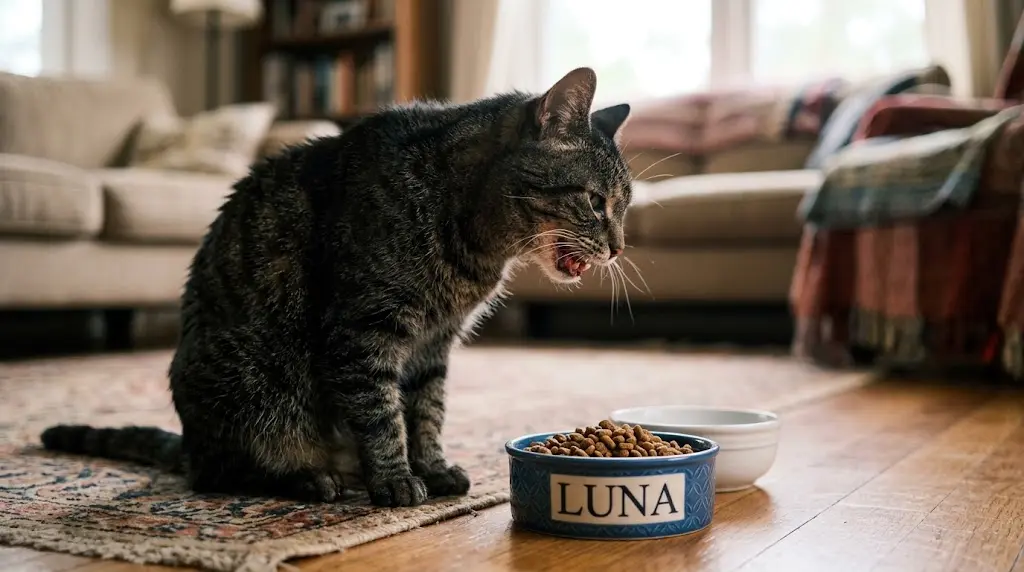
HAPPY CAT AT HOME · FELINE ORAL HEALTH & DENTAL CARE
Signs of Dental Disease in Cats: 12 Vet Warning Signs & Home Remedies (2026)
Understanding feline oral pain, tooth resorption, red gum line warning signs, at-home screening, and safe daily prevention routines.
30-Second Summary for Cat Parents
Signs of dental disease in cats: By age 3, over 70% of cats develop feline periodontal disease, tooth resorption, or gingivitis. Because cats instinctively mask mouth pain, owners rarely notice until a cat drops food or stops eating. The 3 earliest warning signs are foul rotten breath (halitosis), a thin red line along the gums (gingivitis), and dropping kibble or chewing on one side. Catching oral inflammation early with at-home screening, enzymatic water additives, and soft feeding prevents painful tooth extractions and protects kidney and heart health.
🚨 When Dental Pain Becomes a Veterinary Emergency
Because cats are both predators and prey animals in the wild, showing pain is a survival weakness. Consequently, a cat with severe tooth root abscesses, exposed nerve pulp, or ulcerative stomatitis will often continue attempting to eat until the pain becomes unbearable.
- Complete Anorexia (24+ Hours): Refusing food for more than 24 hours (or 12 hours for kittens and overweight cats) risks life-threatening hepatic lipidosis (fatty liver disease). Read our urgent guide on Why Is My Cat Not Eating? 12 Vet-Backed Reasons.
- Active Oral Bleeding: Blood pooling in the water bowl, pink saliva dripping onto furniture, or red tinged fur on the front paws.
- Facial Swelling & Asymmetry: Swelling under one eye, along the cheekbone, or under the jawline, indicating an advanced tooth root abscess.
- Severe Pawing & Head Tilting: Frantic pawing at the mouth, screaming while trying to chew, or shaking the head violently during meals.
- Rotten Meat Odor & Yellow Gums: A severe foul stench accompanied by pale or yellowish gums (jaundice or systemic bacterial overload).
Suspect Severe Cat Tooth Pain or Infection?
Connect with a licensed US veterinarian online from home to evaluate your cat’s oral symptoms, pain levels, and urgent care needs.
💬 Talk to an Online Vet (24/7) → Paid affiliate link · Connect with a licensed US vet in under 15 minutes.12 Early Signs of Cat Dental Problems Every Owner Misses
Veterinary dentists classify oral pain as one of the most agonizing chronic conditions in companion animals. Watch for these 12 clinical warning signs in your cat:
1. Bad Breath (Halitosis) That Smells Rotten, Not Fishy
Mild “fishy” cat food breath after eating is normal. However, a foul, sulfurous, sewer-like, or rotten-meat stench indicates active bacterial proliferation underneath the gumline. Plaque anaerobic bacteria produce volatile sulfur compounds that signal active periodontitis.
2. Thin Red Line Along the Gumline (Gingivitis)
Healthy feline gums are uniform pale pink and firm. A narrow bright red or purple ribbon running along the teeth-gum junction indicates Stage 1 gingivitis. Caught at this early stage, gingivitis is 100% reversible with proper daily home care.
3. Excessive Drooling (Ptyalism) & Wet Chin Fur
Unlike dogs, cats rarely drool out of happiness or anticipation. Unexplained drooling, damp fur around the mouth and neck, or sticky saliva on bedding indicates acute oral discomfort or inability to swallow normally due to inflammation.
4. Dropping Kibble or Chewing Exclusively on One Side
If your cat approaches the bowl enthusiastically, picks up a piece of dry food, tilts her head awkwardly, and drops it back out, she is experiencing sharp tooth pain. Cats frequently switch to chewing on one side of the jaw to avoid touching a painful tooth resorption lesion.
5. Unkept, Matted, or Greasy Coat (Reduced Self-Grooming)
Grooming requires a cat to use her incisors and tongue in repetitive scraping motions. When teeth and gums become inflamed, grooming causes sharp pain, leading the cat to stop grooming. Long-haired breeds quickly develop mats along the lower back, hips, and tail base.
6. Weight Loss Despite an Apparent Desire to Eat
Cats experiencing chronic dental pain often remain hungry. They may walk up to the bowl, meow loudly for food, sniff it, and walk away disappointed because chewing hurts. Over months, this calorie deficit causes progressive weight loss and muscle wasting along the spine.
7. Pawing at the Face & Friction Rubbing Against Furniture
Rubbing the cheek obsessively against rug edges, wall corners, or pawing at the side of the muzzle indicates localized dental pressure. This is commonly seen with upper canine root infections or painful molar resorption.
8. Visible Yellow-Brown Calculus & Tartar Accumulation
Plaque hardens into mineralized tartar (calculus) within 48 to 72 hours. Yellow-brown crusting along the upper cheek teeth (carnassials) traps millions of bacteria beneath the gumline, eroding periodontal ligaments and jawbone structure.
9. Behavioral Shifts: Hiding, Irritability & Reduced Play
Chronic pain alters temperament. A previously affectionate cat that suddenly hides under the bed, swats when touched near the head, or stops playing with wand toys is often suffering from constant oral pain. For more on mood changes, see our guide on 15 Signs of a Depressed Cat & How to Help.
10. Unilateral Sneezing, Nasal Discharge & Watery Eye
The roots of the upper canine teeth extend deep into the nasal cavity. When an upper tooth root develops an abscess, bacteria break through into the nasal passage, causing one-sided nasal discharge, sneezing, or a runny eye on the affected side.
11. Loose, Fractured, or Missing Teeth
Adult cats possess 30 permanent teeth. Any wobbling, chipped enamel, or missing teeth in a non-trauma scenario indicate late-stage advanced periodontal disease. Mobile teeth must be extracted by a vet to eliminate chronic systemic infection.
12. Purring While Eating (Masking Pain Signal)
While purring usually signifies contentment, cats also purr to self-soothe during intense pain or physical distress. A cat that purrs continuously while chewing food or hums anxiously at the bowl is frequently attempting to cope with acute tooth pain.
The 4 Stages of Feline Periodontal Disease
Periodontal disease progresses through four distinct anatomical stages. Understanding where your cat falls determines whether home remedies will suffice or if professional veterinary surgery is mandatory:
| Disease Stage | Anatomical & Clinical Presentation | Reversibility | Veterinary & Home Action Plan |
|---|---|---|---|
| Stage 1: Gingivitis | Mild gum redness, plaque accumulation, zero bone loss or pocketing. | 100% Reversible | Daily enzymatic brushing, VOHC water additives, oral probiotics. |
| Stage 2: Early Periodontitis | Up to 25% attachment loss, mild subgingival calculus, early odor. | Partially Manageable | Professional COHAT cleaning under anesthesia, deep ultrasonic scaling. |
| Stage 3: Moderate Periodontitis | 25% to 50% bone attachment loss, deep periodontal pockets, root exposure. | Irreversible | Professional scaling, closed root planing, selective tooth extractions. |
| Stage 4: Advanced Periodontitis | Over 50% bone destruction, mobile loose teeth, severe pus & bleeding. | Irreversible | Full-mouth surgical extractions, antibiotic therapy, pain management. |
Gingivitis vs. Stomatitis vs. Tooth Resorption (FORL)
Not all cat mouth problems are standard periodontal disease. Veterinarians diagnose three distinct oral conditions that require completely different treatment strategies:
- Gingivitis: Localized inflammation confined to the gingival margin surrounding the teeth. Caused by plaque accumulation and reversible with oral hygiene.
- Feline Tooth Resorption (TR / FORL): A painful condition where specialized cells (odontoclasts) destroy the cat’s tooth structure from the inside out, creating pink erosion holes at the gumline. Affects up to 60% of cats over age 6. Tooth extraction is the only effective treatment.
- Feline Chronic Gingivostomatitis (FCGS): A severe autoimmune condition where the cat’s immune system overreacts to its own dental plaque, causing widespread ulcerative inflammation across the back of the throat (fauces) and cheeks. Frequently requires full-mouth extractions to achieve relief.
Screen Your Cat’s Oral Bacteria at Home
The Basepaws Cat Oral Health Test analyzes the bacterial microbiome of your cat’s mouth from a simple cheek swab, detecting early markers for tooth resorption, periodontitis, and halitosis years before visible tooth decay.
🧬 Get the At-Home Oral Health Test → Paid affiliate link · At-home DNA cheek swab · Free US shipping.How to Check Your Cat’s Teeth at Home (2-Minute Exam)
Performing a monthly oral inspection allows you to catch gingivitis at Stage 1 before bone loss or tooth resorption begins. Follow this gentle 5-step examination protocol:
- Pick a Relaxed Moment: Examine your cat when she is sleepy or cuddling post-meal. Never force an anxious or resistant cat.
- Gently Lift the Upper Lip: Place one hand gently over the bridge of the nose and lift the upper lip on one side to inspect the large upper cheek tooth (carnassial molar).
- Inspect the Gumline Color: Look for smooth, pale pink gums. A thin red line indicates early gingivitis that needs daily intervention.
- Check for Tartar Crust: Look for yellow or brown rock-like buildup along the tooth crowns. If visible, brushing alone cannot remove it—a vet cleaning is needed.
- Smell the Breath: Place your nose near your cat’s muzzle. A strong sulfurous or rotten stench indicates subgingival bacterial infection.
Pro Tip: Take a clear photo of your cat’s upper and lower teeth every month on your phone. Comparing photos over 6 months makes subtle gum recession immediately noticeable.
Cat Teeth Problems Home Remedies & Daily Prevention Routine
Can you treat cat dental disease at home? Stage 1 gingivitis can be reversed at home, but hardened tartar, tooth resorption, and severe periodontitis require professional veterinary care. Use this evidence-based daily prevention protocol:
1. Enzymatic Cat Toothpaste (Never Use Human Toothpaste)
Human toothpaste contains xylitol, fluoride, and foaming agents that are toxic to cats. Enzymatic feline toothpastes contain natural enzymes (lactoperoxidase and glucose oxidase) that break down plaque bacteria without requiring heavy scrubbing. Flavors like poultry or malt make acceptance easy.
2. VOHC-Accepted Water Additives
If your cat refuses toothbrushing, veterinary oral health council (VOHC) accepted liquid water additives can be added directly to your cat’s fresh drinking water. These enzymatic formulas inhibit bacterial biofilm formation and reduce plaque by up to 15% daily. Ensure your cat stays well-hydrated by offering flowing water from a filtered cat water fountain.
3. Oral Microbiome Probiotics
Beneficial oral probiotics introduce healthy bacteria that crowd out pathogenic periodontal strains, reducing bad breath and localized tissue inflammation from the inside out.
4. Whole-Food Antioxidant Toppers
Adding bioavailable antioxidants, bioflavonoids, and omega-3 fatty acids reduces systemic gum inflammation. Mixing a scoop of nutrient-rich toppers into wet meals supports oral mucosal healing.
Boost Oral & Digestive Immunity
Support your cat’s oral tissue recovery and immune defense with human-grade micronutrients and antioxidants.
🌱 Try Meow Greens Risk-Free → Paid affiliate link · Whole-food nutrient topper for cats.What to Feed a Cat with Sore Teeth & Gums
When a cat suffers from dental pain or is recovering from tooth extractions, dry hard kibble acts like sandpaper on inflamed gums. Transitioning to a soft, nutrient-dense diet is essential:
- Warm Smooth Pâté: Switch from hard kibble to smooth canned pâté. Warming wet food in the microwave for 5 to 8 seconds releases rich aromas, stimulating appetite in cats with dulled sense of smell. Read our guide on Best Human-Grade Cat Food in the USA.
- Bone Broth Rehydration: Mix plain, unsalted, onion-free bone broth into wet food to create a soft, lickable soup that requires zero chewing.
- Shallow Ceramic or Glass Dishes: Serve food on wide, flat ceramic plates rather than deep narrow bowls to eliminate whisker fatigue and allow easy licking.
- Hand Feeding Support: Stressed cats with oral pain often accept food when hand-fed small spoonfuls or offered lickable puree treats from a tube.
Veterinary Treatments, Cleaning Costs & Telehealth
When home remedies are insufficient, professional veterinary dentistry is mandatory. A complete dental procedure is called a COHAT (Comprehensive Oral Health Assessment and Treatment).
What Happens During a Veterinary COHAT?
Anesthesia-free “groomer cleanings” only scrape visible surface tartar while leaving 60% of disease hidden beneath the gumline. A true veterinary COHAT includes:
- General anesthesia with full vital monitoring.
- Full-mouth intraoral dental X-rays to detect hidden root resorption and bone loss.
- Ultrasonic subgingival scaling and polishing.
- Surgical extractions of painful, diseased, or resorbed teeth.
Cat Dental Cleaning Costs in the USA (2026 Averages)
- Preventive COHAT (No Extractions): $400 to $850
- Advanced COHAT with Extractions & X-rays: $900 to $2,200+
Need Advice Before Scheduling Surgery?
Discuss your cat’s oral symptoms, dental estimate, or post-extraction recovery plan with a licensed US vet online today.
📞 Consult a Vet Online Today → Paid affiliate link · 24/7 virtual veterinary consultation.Frequently Asked Questions About Cat Dental Problems
How can I tell if my cat is in tooth pain?
Common signs of feline tooth pain include dropping food while eating, chewing on one side of the mouth, foul breath, red gums, excessive drooling, unkept fur, pawing at the cheek, and hiding. Some cats also purr while eating to self-soothe pain.
Can cat dental disease be cured at home without a vet?
Stage 1 gingivitis (red gums without bone loss) can be reversed at home using enzymatic toothpaste, VOHC water additives, and oral probiotics. However, mineralized tartar, tooth resorption, and moderate-to-severe periodontitis require professional veterinary scaling or extractions under anesthesia.
How can I clean my cat’s teeth if she hates brushing?
If your cat refuses a toothbrush, use enzymatic VOHC-accepted water additives, dental wipes, oral gel treatments applied with a finger, or dental kibble. You can also screen oral bacterial levels at home using a cheek-swab kit like the Basepaws Cat Oral Health Test.
What is tooth resorption in cats and what causes it?
Feline tooth resorption (FORL) is an autoimmune condition where the body dissolves the tooth’s structure, exposing sensitive nerve roots. Affecting up to 60% of adult cats, the exact cause remains unknown, though genetics play a major role. Surgical extraction is the only permanent fix.
Why does my cat have terrible breath all of a sudden?
Sudden foul breath in cats is usually caused by rapid anaerobic bacterial growth associated with periodontal disease, a trapped piece of bone/hair in the teeth, a tooth root abscess, or systemic organ issues such as chronic kidney disease. A vet check is strongly recommended.
Is dry food really better than wet food for cat teeth?
Standard dry kibble shatters immediately upon contact with teeth, providing minimal scraping action. Only specially formulated VOHC-accepted dental kibbles with large, fibrous matrix structures reduce plaque. Daily brushing and oral additives are far more effective than standard dry kibble alone.